What Is the End of Greatness? The Scale Where the Universe Becomes Homogeneous

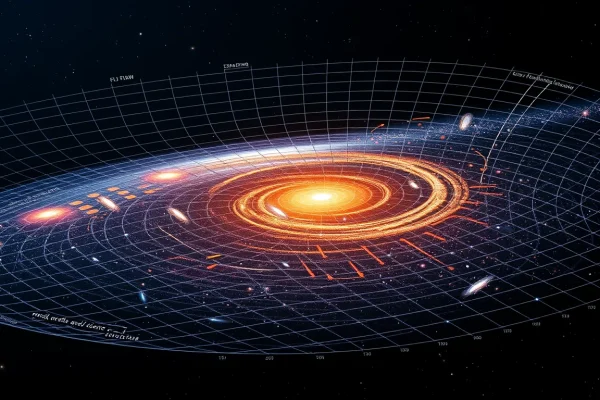
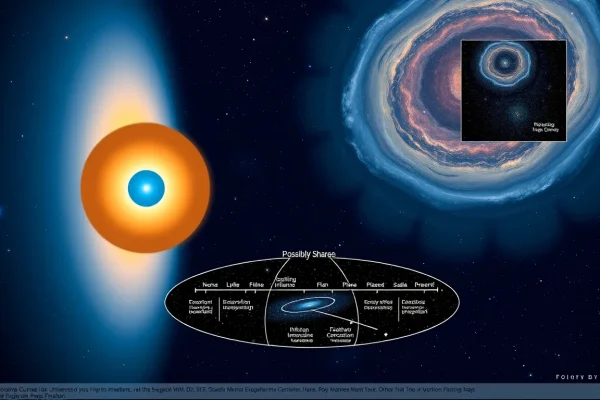
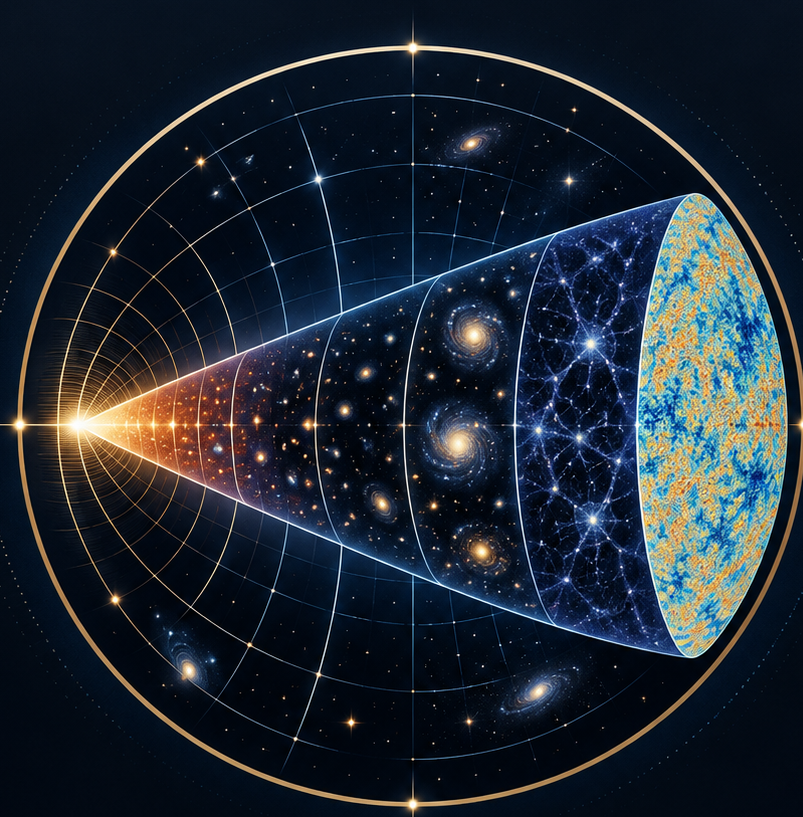
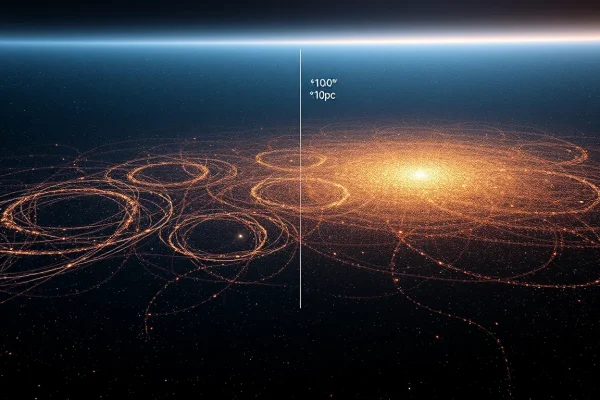
The End of Greatness marks the cosmic scale—roughly 100 megaparsecs—beyond which the universe’s lumpy structure gives way to smooth homogeneity. This article explores that threshold, the cosmic epochs leading to it, and the evidence from missions like COBE, WMAP, Planck, and JWST that anchor our understanding of the universe’s evolution.
Read More →

What Is Quantum Gravity? The Physics of the Planck Epoch

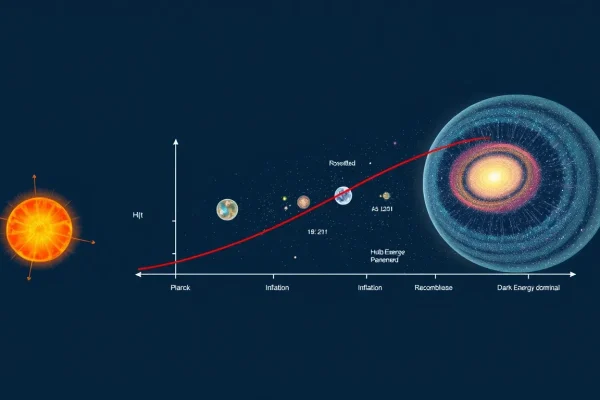
Quantum gravity is the still-incomplete theoretical framework needed to describe the universe at the Planck scale, where both quantum mechanics and general relativity are essential. This article explores the Planck epoch—the earliest instants after the Big Bang—and traces the cosmic timeline from that quantum-dominated beginning through inflation, nucleosynthesis, recombination, and the formation of stars and galaxies.

Read More →

Cosmological Redshift vs. Doppler Redshift: The Two Ways Light Stretches Across the Universe

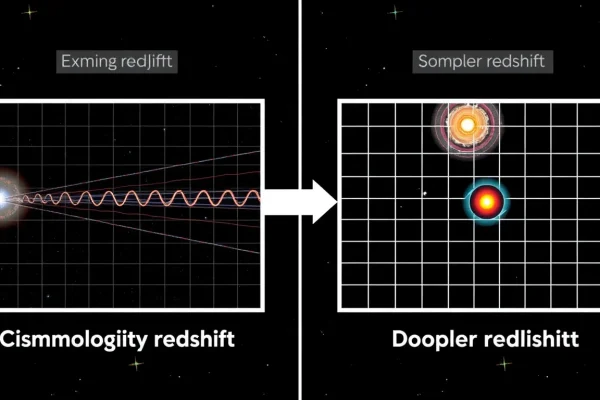
Cosmological redshift and Doppler redshift both shift light toward longer wavelengths, but they arise from different physical causes. Cosmological redshift is caused by the expansion of space itself, while Doppler redshift is caused by the relative motion of the source and observer through space. Understanding the distinction is essential for interpreting observations of distant galaxies and the evolution of the universe.

Read More →