What Is the BICEP/Keck Experiment and What Did It Reveal About Primordial Gravitational Waves?

The BICEP/Keck experiment is a series of South Pole telescopes searching for the faint polarization pattern in the cosmic microwave background that would signal primordial gravitational waves from cosmic inflation. While no direct detection has been made as of 2025, the experiment has set the tightest constraints yet on inflation models.
Read More →

How Do Galaxy Surveys Detect Baryon Acoustic Oscillations?

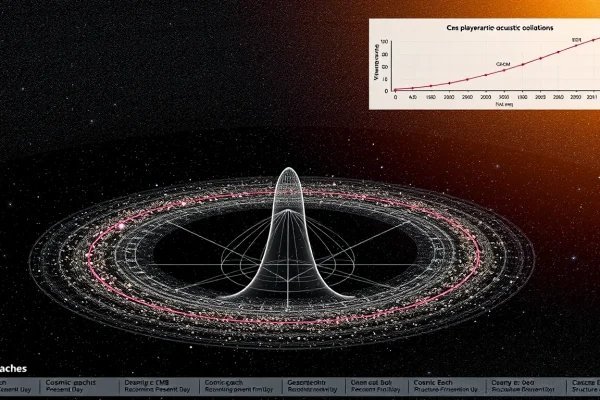
Baryon acoustic oscillations (BAOs) are a fossil imprint of sound waves in the early universe, appearing as a subtle clustering pattern in galaxy distributions. Galaxy surveys detect this pattern by measuring the correlation function or power spectrum, revealing a characteristic scale that serves as a standard ruler for cosmic expansion. This guide explains the detection method, its cosmic significance, and the full timeline of cosmic evolution from the Planck epoch to today.

Read More →

What Are the Challenges of Observing the First Stars?

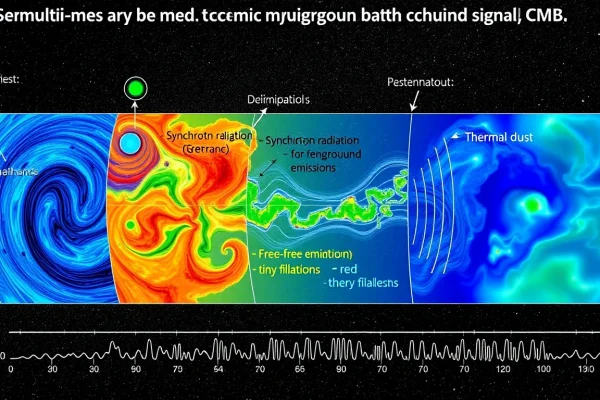
The first stars, known as Population III, ended the cosmic dark ages and seeded the universe with heavy elements. Observing them directly is one of astronomy’s greatest challenges because they are extremely distant, faint, short-lived, and their light is redshifted far into the infrared. This guide explains the obstacles, the cosmic epochs that set the stage, and how missions like JWST are pushing the observational frontier.

Read More →

What Is the CMB-S4 Experiment? A Guide to the Universe’s First Moments

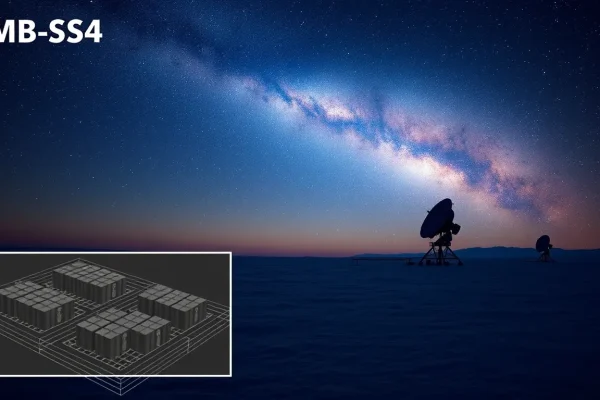
CMB-S4 was a proposed next-generation ground-based observatory designed to study the cosmic microwave background and probe the universe’s earliest moments. Although canceled in 2025, its scientific goals and technical innovations continue to shape cosmology. This article explains the experiment, the cosmic epochs it would have explored, and why the CMB remains a cornerstone of modern astrophysics.

Read More →