
Short Answer
Main Explanation
The cosmic microwave background (CMB) is the oldest light in the universe, a faint glow that fills all of space. It was emitted roughly 380,000 years after the Big Bang, when the universe cooled enough for electrons and protons to combine into neutral hydrogen, allowing photons to travel freely for the first time. This relic radiation carries a wealth of information about the early universe, including the seeds of all cosmic structure. Ground-based experiments such as the Atacama Cosmology Telescope (ACT) and the Simons Observatory (SO) are designed to measure tiny fluctuations in the CMB’s temperature and polarization with exquisite precision. These measurements help cosmologists test the standard Lambda-CDM model, constrain the parameters of inflation, and probe the physics of the early universe.
The Cosmic Microwave Background as a Relic
The CMB is a direct snapshot of the universe at the moment of recombination, when the opaque plasma of the early universe became transparent. The photons we detect today have traveled for 13.8 billion years, stretched by the expansion of space to wavelengths of about 1 millimeter. Their temperature is a near-uniform 2.725 K, but tiny anisotropies—fluctuations at the level of one part in 100,000—reveal the density variations that eventually grew into galaxies and clusters. The CMB also carries a polarization pattern, including a faint B-mode signal that could be a fingerprint of gravitational waves from cosmic inflation.
Why Ground-Based?
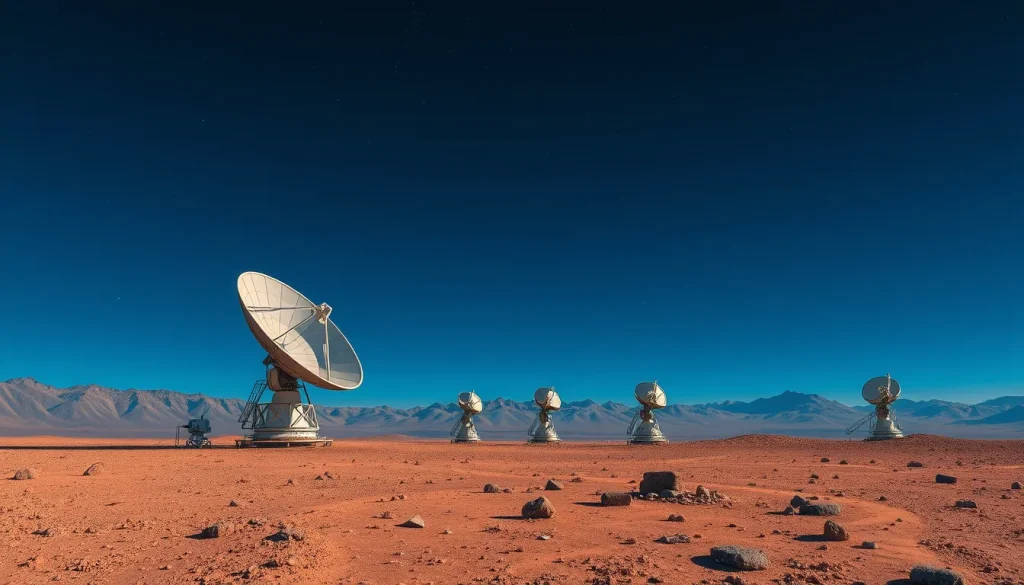
Space missions like COBE, WMAP, and Planck have provided pristine, all-sky maps of the CMB. However, ground-based experiments offer complementary advantages: they can deploy much larger telescopes, achieve higher angular resolution, and observe smaller patches of sky in greater depth. The atmosphere is the main obstacle, as it emits and absorbs microwave radiation. But at high, dry sites like the Atacama Desert in Chile (altitude ~5,200 m), the atmosphere is thin and dry enough to open several frequency windows. Ground-based experiments are also less expensive to build and upgrade, allowing rapid technological progress.
How Ground-Based CMB Experiments Work
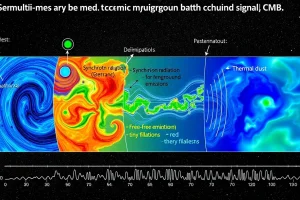
The basic design of a ground-based CMB experiment involves a large-aperture telescope that focuses the CMB radiation onto a focal plane packed with thousands of superconducting detectors. ACT uses a 6-meter primary mirror, while the Simons Observatory employs three small-aperture telescopes (SATs) and one large-aperture telescope (LAT) with about 30,000 transition-edge sensor (TES) bolometers. These bolometers are cooled to fractions of a degree above absolute zero to measure the power of incoming radiation with extreme sensitivity. The telescopes scan the sky, and multiple frequency bands (typically 90–220 GHz) allow separation of the CMB from galactic foregrounds such as synchrotron radiation and thermal dust.
Timeline of Cosmic Epochs
The CMB encodes information about the entire history of the universe. The following table summarizes the major epochs from the Planck epoch to the present day, with approximate times, redshifts, and temperatures.
| Epoch | Time After Big Bang | Approx. Redshift | Temperature | Key Events |
|---|---|---|---|---|
| Planck epoch | < 10⁻⁴³ s | > 10³² | > 10³² K | Quantum gravity effects dominate; no unified theory yet. |
| Grand Unification epoch | 10⁻⁴³ – 10⁻³⁶ s | ~10³² – 10²⁸ | 10²⁸ – 10³² K | Strong and electroweak forces unified; inflation begins. |
| Inflationary epoch | 10⁻³⁶ – 10⁻³² s | ~10²⁸ – 10²² | Dropping rapidly | Exponential expansion; quantum fluctuations seeded structure. |
| Electroweak epoch | 10⁻³² – 10⁻¹² s | ~10²² – 10¹⁵ | 10¹⁵ – 10²⁸ K | Electromagnetic and weak forces separate; particles acquire mass. |
| Quark epoch | 10⁻¹² – 10⁻⁶ s | ~10¹⁵ – 10¹⁰ | 10¹² – 10¹⁵ K | Quarks and gluons form quark-gluon plasma. |
| Hadron epoch | 10⁻⁶ – 1 s | ~10¹⁰ – 10⁹ | 10¹⁰ – 10¹² K | Protons and neutrons form; matter-antimatter asymmetry emerges. |
| Lepton epoch | 1 – 10 s | ~10⁹ – 10⁸ | 10⁹ – 10¹⁰ K | Leptons dominate; neutrinos decouple. |
| Photon epoch | 10 s – 380,000 yr | ~10⁸ – 1,100 | 10⁹ K – 3,000 K | Universe is plasma; photons tightly coupled to matter. |
| Recombination | ~380,000 yr | ~1,100 | ~3,000 K | Electrons combine with protons to form neutral hydrogen; CMB emitted. |
| Dark Ages | 380,000 – 150 million yr | 1,100 – 20 | 3,000 K – 60 K | No luminous sources; universe is dark and neutral. |
| Reionization | 150 million – 1 billion yr | 20 – 6 | 60 K – 20 K | First stars and quasars ionize neutral hydrogen. |
| Structure Formation | 1 billion yr – present | < 6 | < 20 K | Galaxies, clusters, and large-scale structure form. |
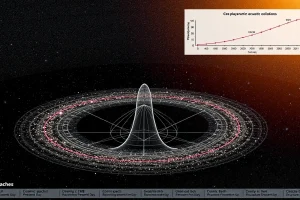
Ground-based CMB experiments primarily probe the epoch of recombination and the subsequent growth of structure via gravitational lensing of the CMB. By measuring the temperature and polarization power spectra at small angular scales, they can constrain cosmological parameters, including the Hubble constant, dark matter density, and the tilt of the primordial power spectrum.
Key Missions and Instruments
Space missions have laid the foundation: COBE (1989) discovered the CMB’s blackbody spectrum and first anisotropies; WMAP (2001) mapped the full sky with high precision; Planck (2009) achieved the sharpest all-sky measurements. Ground-based experiments like ACT and the Simons Observatory extend these results with higher resolution and sensitivity in targeted regions. ACT began observing in 2007 and has produced leading measurements of the CMB power spectrum and gravitational lensing. The Simons Observatory, with first light in the 2020s, is designed to achieve a factor of several improvement in sensitivity, particularly for polarization measurements.
Mission Overview: ACT and Simons Observatory
Mission Facts
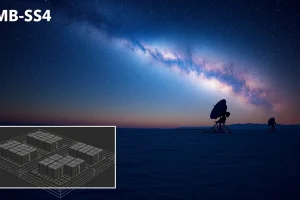
Atacama Cosmology Telescope (ACT): A 6-meter telescope located at Cerro Toco, Atacama Desert, Chile, at an altitude of 5,190 m. It began operations in 2007 and has undergone several upgrades with cameras such as ACTPol and Advanced ACTPol.
Simons Observatory (SO): A next-generation ground-based experiment at the same site, consisting of three small-aperture telescopes (SATs) and one large-aperture telescope (LAT). The LAT has a 6-meter primary mirror, similar to ACT, but with about 30,000 detectors across multiple frequency bands.
Launch
Neither ACT nor SO is a space mission; they are ground-based observatories. ACT was deployed and achieved first light in 2007. The Simons Observatory began initial observations in 2023–2024, with full science operations expected in 2025.
Telescope/Instrument
ACT uses a 6-meter off-axis Gregorian telescope with a focal plane containing thousands of superconducting transition-edge sensor (TES) bolometers. The Simons Observatory’s LAT is similar in design, while its SATs are compact refracting telescopes optimized for polarization measurements on large angular scales. All instruments are cooled to ~100 mK to reduce thermal noise.
Wavelength
Both experiments observe in the millimeter to submillimeter range, with frequency bands centered near 90, 150, 220, and 280 GHz. These frequencies are chosen to balance CMB signal strength against atmospheric transparency and foreground contamination.
Objective
The primary objectives are to measure the CMB temperature and polarization anisotropies with high precision to: (1) constrain the parameters of cosmic inflation, including the tensor-to-scalar ratio; (2) measure the sum of neutrino masses; (3) probe dark energy through cluster counts and lensing; (4) resolve the Hubble tension by providing independent measurements of the Hubble constant.
Major Results
ACT has produced leading measurements of the CMB power spectrum at small angular scales, detected gravitational lensing of the CMB, and measured the Hubble constant using the CMB alone. The Simons Observatory is expected to improve constraints on the tensor-to-scalar ratio and neutrino masses by a factor of several compared to current limits.
Dataset
Both ACT and SO release their calibrated maps, power spectra, and derived cosmological products to the public through their respective data archives, enabling independent analyses by the broader community.
Legacy
These ground-based experiments demonstrate the power of large detector arrays and atmospheric correction techniques. They complement space missions by providing high-resolution observations of specific regions, and they pave the way for future CMB experiments, including the proposed CMB-S4 project.
Why It Matters
The CMB is our most direct window into the first moments of the universe. By measuring its properties with ever-increasing precision, we test the fundamental physics of the Big Bang, inflation, and the composition of the cosmos. Ground-based experiments like ACT and the Simons Observatory are not just technical achievements; they are essential tools for answering some of the deepest questions in science: What happened at the very beginning? What is the universe made of? How did structure form? The answers have profound implications for our understanding of space, time, and the ultimate fate of the universe.
Evidence / Sources
The scientific results from ACT and the Simons Observatory are published in peer-reviewed journals and presented at major conferences. Key references include the instrument overviews and design papers cited below. The cosmic epoch table is based on the standard Lambda-CDM model, as summarized in numerous cosmology textbooks and review articles.
Related Registry Entries
This article connects to other entries in the cosmology registry, including the Cosmic Microwave Background, Inflation, Recombination, Large-Scale Structure, and the Hubble Constant. Each entry provides deeper dives into specific topics.
FAQ
Why do we need ground-based CMB experiments if we have space telescopes like Planck?
Ground-based experiments can use larger apertures and more detectors, providing higher angular resolution and sensitivity in targeted regions. They are also cheaper and easier to upgrade, allowing rapid technological advances that complement the all-sky maps from space missions.
How do ground-based telescopes handle the atmosphere?
They are located at high, dry sites like the Atacama Desert, where atmospheric water vapor is minimal. They also observe in specific frequency windows where the atmosphere is relatively transparent, and they use sophisticated algorithms to subtract atmospheric noise from the data.
What is the main scientific goal of the Simons Observatory?
The Simons Observatory aims to measure the polarization of the CMB with unprecedented precision, particularly the faint B-mode signal that could be produced by gravitational waves from inflation. It also seeks to constrain neutrino masses and dark energy.
Leave a Reply