What Is the Horizon Problem? How Inflation Solves the CMB’s Uniformity
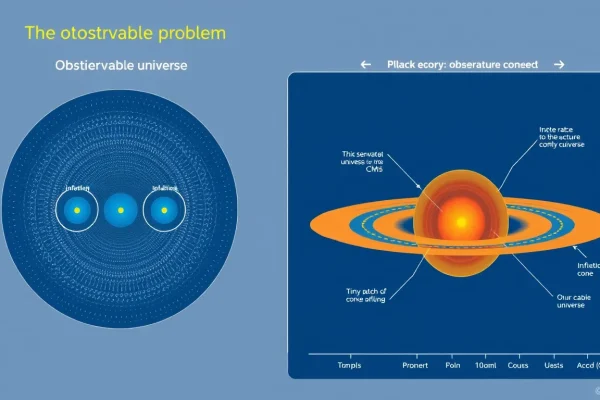
A comprehensive guide to the horizon problem, why the cosmic microwave background is so uniform, and how cosmic inflation resolves this paradox, with a timeline of cosmic epochs.


A comprehensive guide to the horizon problem, why the cosmic microwave background is so uniform, and how cosmic inflation resolves this paradox, with a timeline of cosmic epochs.
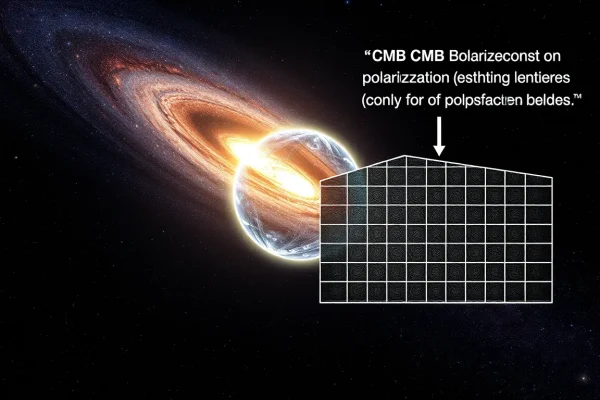
Gravitational lensing of the cosmic microwave background (CMB) subtly distorts its polarization, converting E-modes into B-modes and contaminating the primordial signal from inflation. This article explains the physics, the cosmic epochs that shaped the CMB, and how modern experiments disentangle the lensing signal to probe the early universe.
CMB polarization is the faint directional pattern imprinted on the oldest light in the universe by Thomson scattering at the last scattering surface. It encodes information about inflation, gravitational waves, and the structure of the early cosmos, offering one of the most powerful observational windows into the universe’s first moments.
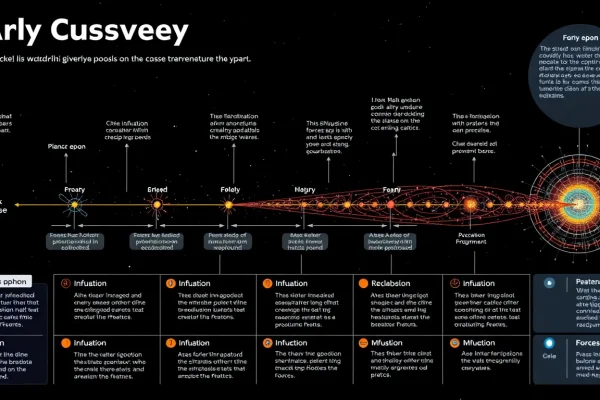
Symmetry breaking in the early universe describes how the unified forces of nature separated as the cosmos cooled, shaping the particles and structure we observe today. This article explores the key epochs from the Planck era to structure formation, the role of inflation, and the cosmic microwave background as a relic of that transformative time.
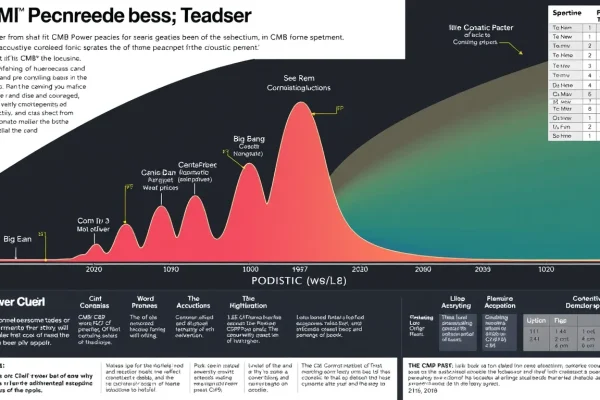
The cosmic microwave background’s acoustic peaks encode the geometry and matter content of the universe. By measuring their positions and heights, cosmologists can determine the total density, baryon density, and curvature with remarkable precision.
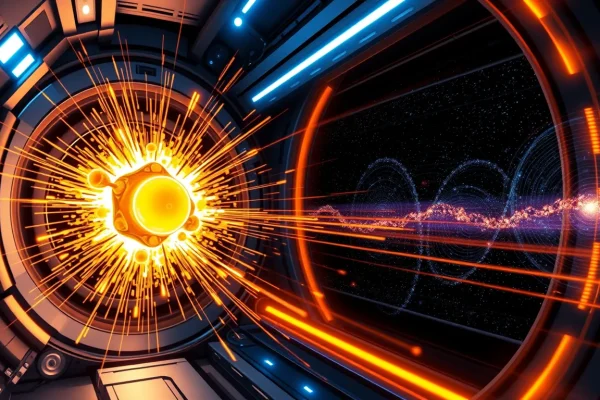
Particle accelerators like the LHC and RHIC smash heavy ions at near-light speed to recreate the quark-gluon plasma that filled the universe microseconds after the Big Bang. These experiments let physicists probe the fundamental conditions of the cosmos, from the Planck epoch to the formation of the first atoms.
The first stars, known as Population III, ended the cosmic dark ages and seeded the universe with heavy elements. Observing them directly is one of astronomy’s greatest challenges because they are extremely distant, faint, short-lived, and their light is redshifted far into the infrared. This guide explains the obstacles, the cosmic epochs that set the stage, and how missions like JWST are pushing the observational frontier.
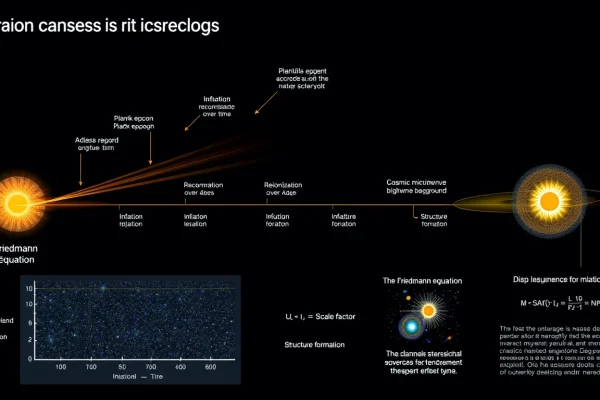
The Friedmann equation is a set of equations in physical cosmology that govern the expansion of a homogeneous, isotropic universe. Derived from Einstein’s field equations, it forms the backbone of the standard Big Bang model and the ΛCDM paradigm, describing how the scale factor evolves with time.
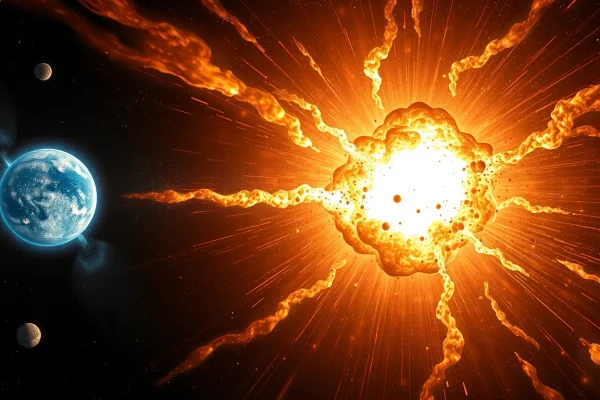
Pair-instability supernovae are colossal explosions predicted to have occurred among the first-generation stars, known as Population III. These events may have enriched the early universe with heavy elements, influenced reionization, and left a unique observational signature that telescopes like JWST are now seeking.
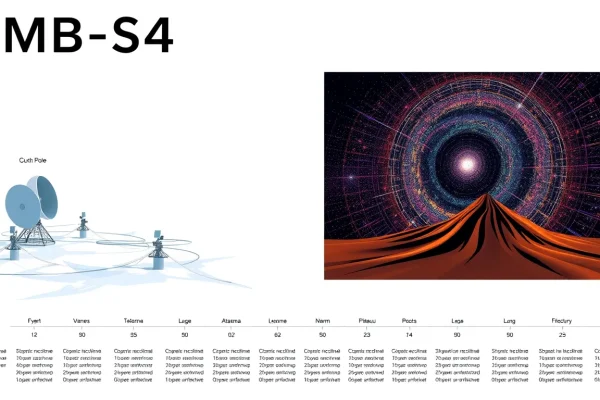
CMB-S4 was a proposed next-generation ground-based observatory designed to study the cosmic microwave background and probe the universe’s earliest moments. Although canceled in 2025, its scientific goals and technical innovations continue to shape cosmology. This article explains the experiment, the cosmic epochs it would have explored, and why the CMB remains a cornerstone of modern astrophysics.