What Is the Sound Horizon in Cosmology?

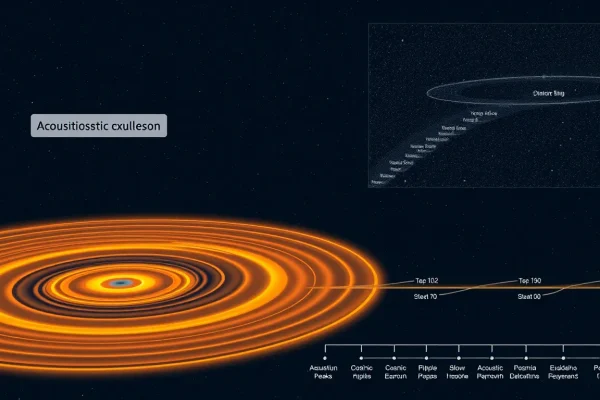
The sound horizon is the maximum distance a sound wave could have traveled through the hot plasma of the early universe from the Big Bang until recombination. This fixed scale leaves a distinct imprint on the cosmic microwave background and the large-scale structure of the universe, making it a crucial ruler for measuring cosmic expansion and the geometry of space.

Read More →

Cosmological Redshift vs. Doppler Redshift: The Two Ways Light Stretches Across the Universe

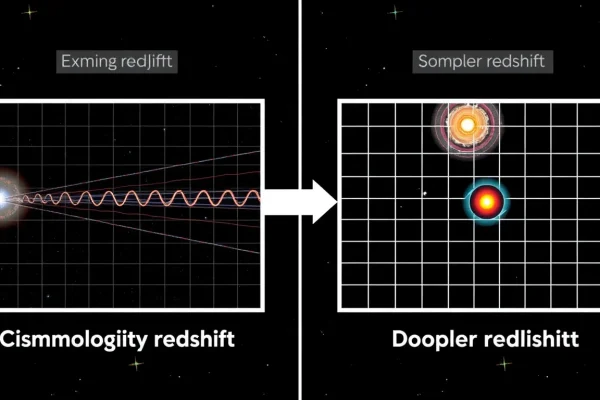
Cosmological redshift and Doppler redshift both shift light toward longer wavelengths, but they arise from different physical causes. Cosmological redshift is caused by the expansion of space itself, while Doppler redshift is caused by the relative motion of the source and observer through space. Understanding the distinction is essential for interpreting observations of distant galaxies and the evolution of the universe.

Read More →