
Short Answer
Main Explanation
Primordial gravitational waves are ripples in the fabric of spacetime that were generated during the earliest moments of the universe, specifically during a phase of exponential expansion known as cosmic inflation. According to the standard cosmological model, inflation stretched quantum fluctuations of spacetime itself to macroscopic scales, producing a stochastic background of gravitational waves that persists today. These waves are fundamentally different from those produced by astrophysical sources like merging black holes; they carry information about the physics of the very early universe, at energies many orders of magnitude beyond what particle accelerators can achieve.
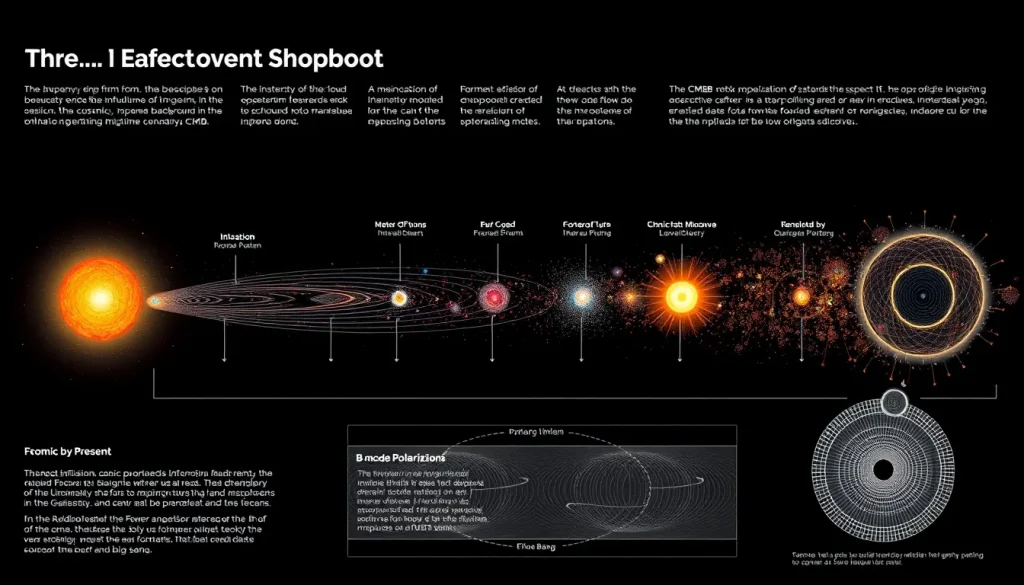
The most promising way to detect primordial gravitational waves is through their imprint on the cosmic microwave background (CMB), the relic radiation left over from the hot Big Bang. As gravitational waves pass through the primordial plasma, they induce a characteristic pattern of polarization in the CMB. This pattern can be decomposed into two types: E-modes (curl-free) and B-modes (divergence-free). While E-modes can be produced by density fluctuations, B-modes at large angular scales are uniquely generated by primordial gravitational waves (or by gravitational lensing at smaller scales). Thus, the detection of primordial B-modes is considered a smoking-gun signature of inflation and of the quantum nature of gravity.
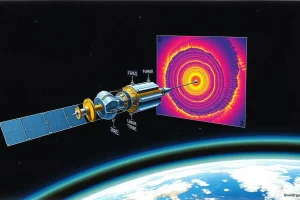
The quest for B-modes has been a major driver of CMB experiments. The BICEP/Keck array, the South Pole Telescope, the Atacama Cosmology Telescope, and the Planck satellite have all searched for this signal. As of 2024, no definitive detection of primordial B-modes has been made, but upper limits have significantly constrained inflationary models. The latest constraints from Planck, ACT, SPT, and their combination with BICEP/Keck (BK18) data provide the strongest limits to date on the tensor-to-scalar ratio r, a key parameter that quantifies the amplitude of primordial gravitational waves relative to density fluctuations.
Understanding primordial gravitational waves is not just about confirming inflation; it is about probing the physics of the universe at the Planck epoch (10−43 seconds) and the Grand Unification epoch (10−36 seconds), where the four fundamental forces are thought to have been unified. A detection would reveal the energy scale of inflation and potentially discriminate among the many competing inflationary models.
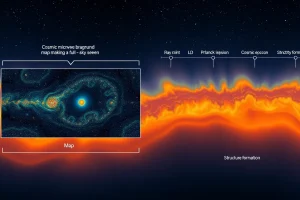
Cosmic Epochs: A Timeline of the Early Universe
The history of the universe from its birth to the present is divided into distinct epochs, each marked by changes in temperature, particle content, and physical processes. Primordial gravitational waves were generated during the inflationary epoch, but their effects are observed in the CMB and in the large-scale structure of the universe.
| Epoch | Time After Big Bang | Temperature | Key Events |
|---|---|---|---|
| Planck Epoch | < 10−43 s | > 1032 K | Quantum gravity effects dominate; current physics breaks down. |
| Grand Unification Epoch | 10−43 – 10−36 s | 1028 – 1032 K | Strong and electroweak forces unify; inflation begins. |
| Inflationary Epoch | 10−36 – 10−32 s | Dropping rapidly | Exponential expansion; quantum fluctuations stretched; primordial gravitational waves generated. |
| Electroweak Epoch | 10−32 – 10−12 s | 1015 – 1028 K | Electromagnetic and weak forces separate; possible baryogenesis. |
| Quark Epoch | 10−12 – 10−6 s | 1012 – 1015 K | Quarks and gluons form a quark-gluon plasma. |
| Hadron Epoch | 10−6 – 1 s | 1012 – 1010 K | Protons and neutrons form; matter-antimatter annihilation. |
| Lepton Epoch | 1 – 10 s | 1010 – 109 K | Leptons and antileptons dominate; neutrinos decouple. |
| Photon Epoch | 10 s – 380,000 yr | 109 – 3,000 K | Photons dominate; Big Bang nucleosynthesis occurs (first 20 minutes). |
| Recombination | ~380,000 yr | ~3,000 K | Electrons combine with protons to form neutral hydrogen; universe becomes transparent; CMB released. |
| Dark Ages | 380,000 – ~150 million yr | 3,000 – 50 K | No stars or luminous sources; matter dominated by dark matter and neutral gas. |
| Reionization | ~150 million – 1 billion yr | ~50 – 20 K | First stars and galaxies form; ultraviolet light reionizes hydrogen. |
| Structure Formation | 1 billion yr – present | Dropping to 2.7 K | Galaxies, clusters, and large-scale structure grow under gravity; dark energy accelerates expansion. |
Each epoch is a chapter in the cosmic story. The CMB we observe today is a snapshot of the universe at recombination, carrying the imprint of the earlier epochs, including the B-mode polarization from primordial gravitational waves. Missions like COBE, WMAP, and Planck have mapped the CMB with increasing precision, revealing the tiny temperature fluctuations that seeded galaxy formation. The James Webb Space Telescope (JWST) is now probing the epoch of reionization and the first galaxies, extending our view closer to the cosmic dawn.
Why It Matters
Primordial gravitational waves are more than a theoretical curiosity. They are a direct probe of the physics that governed the universe at energies unattainable in laboratories. If detected, they would confirm the quantum origin of structure and provide the first direct evidence for quantized gravity. They would also help distinguish between the many inflationary models, each predicting a different amplitude and spectral tilt for the gravitational wave background. Moreover, the study of B-modes is a test of the standard Lambda-CDM model; any deviation from predictions could signal new physics, such as a modified theory of gravity or the presence of additional light species during inflation.
The cosmic epochs described above are not merely historical milestones; they are the stages on which the universe’s fundamental forces and particles were forged. By understanding when and how each epoch occurred, we gain insight into the laws of nature at extreme conditions. The CMB is the key to unlocking this past, and primordial gravitational waves are the faintest whisper from the very beginning.
Evidence / Sources
The primary evidence for the standard cosmological model comes from a variety of observations: the nearly perfect blackbody spectrum of the CMB, its anisotropies, the abundances of light elements from Big Bang nucleosynthesis, and the large-scale distribution of galaxies. For primordial gravitational waves specifically, the search focuses on B-mode polarization in the CMB. The BICEP/Keck array, along with Planck, has placed upper limits on the tensor-to-scalar ratio r < 0.036 (95% CL) as of 2024, ruling out many simple inflationary models. Future experiments, such as the Simons Observatory and CMB-S4, aim to reach sensitivities of r ~ 0.001, which would cover the parameter space of most viable models.
References for this article include the Annual Review of Astronomy and Astrophysics article by Kamionkowski and Kovetz (2016) on the quest for B-modes, the Science paper by Krauss, Dodelson, and Meyer (2010) on primordial gravitational waves and cosmology, the Reviews of Modern Physics article by Roshan and White (2025) on using gravitational waves to see the first second of the universe, and the arXiv preprint by Wang (2024) providing the latest constraints on primordial gravitational waves.
Related Registry Entries
- Cosmic Microwave Background
- Inflation
- B-Mode Polarization
- Tensor-to-Scalar Ratio
- Recombination
- Reionization
FAQ
What are primordial gravitational waves?
Primordial gravitational waves are ripples in spacetime produced during cosmic inflation. They are a stochastic background of gravitational radiation that encodes information about the physics of the early universe.
How are primordial gravitational waves detected?
They are detected indirectly through their imprint on the polarization of the cosmic microwave background, specifically by measuring B-mode polarization at large angular scales. Direct detection with space-based interferometers like LISA is also possible for some models.
What is the tensor-to-scalar ratio?
The tensor-to-scalar ratio (r) is the ratio of the amplitude of tensor perturbations (gravitational waves) to scalar perturbations (density fluctuations). It is a key parameter that determines the strength of the B-mode signal.
Why haven't we detected primordial B-modes yet?
The signal is extremely faint and contaminated by foreground emission from galactic dust and synchrotron radiation, as well as gravitational lensing of E-modes. Current experiments are working to improve sensitivity and foreground removal.
Leave a Reply