
Short Answer
Main Explanation
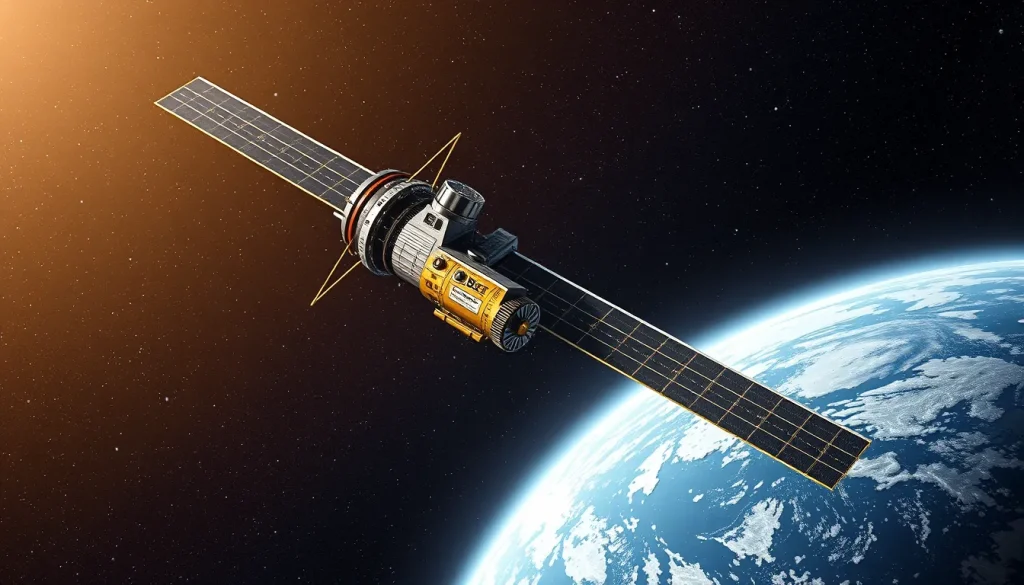
The Cosmic Background Explorer (COBE) satellite, launched by NASA on November 18, 1989, into a polar sun-synchronous orbit 900 kilometers above Earth, was designed to study the origin and dynamics of the universe. Its primary goal was to measure the cosmic microwave background (CMB) — the faint afterglow of the Big Bang — with unprecedented accuracy. COBE carried three instruments: the Far-Infrared Absolute Spectrophotometer (FIRAS), the Differential Microwave Radiometers (DMR), and the Diffuse Infrared Background Experiment (DIRBE).
Before COBE, the CMB had been detected in 1964 by Arno Penzias and Robert Wilson, but its spectrum and spatial structure were poorly known. COBE’s FIRAS instrument measured the CMB spectrum across a wide range of infrared wavelengths and found it to match a perfect blackbody curve with a temperature of (2.73 pm 0.06) K, with no deviation greater than 0.25% of the peak brightness (source 2). This result provided decisive confirmation that the universe expanded from a hot, dense state — the Big Bang — because no other known process produces such a precise thermal spectrum.
The DMR instrument made the first detection of intrinsic anisotropies in the CMB — tiny variations in temperature across the sky at the level of one part in 100,000 (source 3). These fluctuations, first announced in 1992, are the seeds of all cosmic structure: galaxies, galaxy clusters, and the large-scale distribution of matter. The DMR maps also revealed the dipole anisotropy, a smooth hot-cold pattern caused by the solar system’s motion relative to the CMB frame (source 3). After subtracting the dipole and galactic foregrounds, the residual anisotropies match predictions of a scale-invariant primordial density fluctuation spectrum, as expected from inflationary cosmology (source 2).
COBE’s measurements transformed cosmology from a largely qualitative field into a quantitative science. The precision of the CMB spectrum — better than 50 parts per million (source 4) — and the detection of anisotropies earned John Mather and George Smoot the 2006 Nobel Prize in Physics. COBE’s legacy continues through subsequent missions like WMAP and Planck, which refined these measurements, and through the ongoing exploration of the early universe with telescopes like JWST.
Cosmic Epochs: The Timeline of the Universe
The CMB is a relic from a specific cosmic epoch — recombination — when the universe cooled enough for electrons and protons to combine into neutral hydrogen. But to understand the full significance of COBE’s discoveries, we must place them in the context of the entire cosmic timeline. The standard model of cosmology, the Lambda-CDM model, describes a sequence of epochs from the Planck epoch to the present day. The table below summarizes the major epochs, their approximate times, temperatures, and key events.
| Epoch | Time (after Big Bang) | Temperature | Key Events |
|---|---|---|---|
| Planck Epoch | 0 to (10^{-43}) s | > (10^{32}) K | Quantum gravity effects dominate; no current physics describes this era. |
| Grand Unification Epoch | (10^{-43}) to (10^{-36}) s | (10^{27}) K | Strong and electroweak forces are unified; inflation begins near its end. |
| Inflationary Epoch | (10^{-36}) to (10^{-32}) s | (10^{27}) to (10^{22}) K | Rapid exponential expansion; quantum fluctuations become seeds of structure. |
| Electroweak Epoch | (10^{-32}) to (10^{-12}) s | (10^{22}) to (10^{15}) K | Electromagnetic and weak forces separate; quarks and leptons are present. |
| Quark Epoch | (10^{-12}) to (10^{-6}) s | (10^{15}) to (10^{12}) K | Quarks and gluons exist in a quark-gluon plasma. |
| Hadron Epoch | (10^{-6}) to 1 s | (10^{12}) to (10^{10}) K | Quarks combine to form protons and neutrons; matter-antimatter annihilation occurs. |
| Lepton Epoch | 1 s to 10 s | (10^{10}) to (10^{9}) K | Leptons (electrons, neutrinos) dominate; neutrinos decouple. |
| Photon Epoch | 10 s to 380,000 years | (10^{9}) to 3,000 K | Photons dominate; nucleosynthesis produces light elements (H, He, Li). |
| Recombination | ~380,000 years | ~3,000 K | Electrons combine with protons to form neutral hydrogen; photons decouple — the CMB is released. |
| Dark Ages | 380,000 to ~150 million years | ~3,000 to ~60 K | No stars yet; the universe is dark and filled with neutral hydrogen. |
| Reionization | ~150 million to ~1 billion years | ~60 to ~20 K | First stars and galaxies form; their radiation reionizes the intergalactic medium. |
| Structure Formation | ~1 billion years to present | ~20 K to 2.73 K | Galaxies, clusters, and large-scale structure assemble under gravity; dark energy accelerates expansion. |
The CMB we observe today is the snapshot of the universe at recombination, redshifted to a temperature of 2.73 K. COBE’s measurement of this temperature, and its anisotropies, provide the most direct observational link to the earliest moments of the cosmos. The anisotropies, at the level of one part in 100,000, correspond to density fluctuations that grew over billions of years into the galaxies and clusters we see today. This connection between quantum fluctuations during inflation and the large-scale structure of the universe is one of the central triumphs of modern cosmology.
Why It Matters
COBE’s discoveries fundamentally changed our understanding of the universe. By confirming the blackbody spectrum of the CMB, it validated the hot Big Bang model and ruled out alternative theories such as steady-state cosmology. The detection of anisotropies provided the initial conditions for all cosmic structure, linking the early universe to the formation of galaxies and clusters. COBE also set the stage for precision cosmology: subsequent missions like WMAP (2001–2010) and Planck (2009–2013) mapped the CMB anisotropies with even greater detail, measuring the acoustic peaks and polarization that constrain cosmological parameters such as the Hubble constant, dark matter density, and the curvature of space. The legacy of COBE is not only its scientific results but also the demonstration that space-based observatories can measure the cosmos with exquisite precision, inspiring missions like JWST that continue to probe the early universe.
Evidence / Sources
The findings described above are supported by multiple authoritative sources. NASA’s official COBE mission page and John Mather’s archived page at Goddard Space Flight Center document the mission’s instruments and results (source 1, 3, 4). The peer-reviewed paper in PNAS (source 2) provides the quantitative results: the CMB spectrum is a blackbody at (2.73 pm 0.06) K with no deviation greater than 0.25%, and the DMR anisotropies are consistent with a scale-invariant primordial spectrum. These sources are listed in the references section below.
Related Registry Entries
- Cosmic Microwave Background: The relic radiation from the Big Bang, now observed at microwave wavelengths.
- Anisotropy: Tiny temperature variations in the CMB that reveal the density fluctuations of the early universe.
- Inflation: The exponential expansion of space in the first (10^{-32}) seconds, seeding the anisotropies.
- Recombination: The epoch when electrons and protons combined to form neutral hydrogen, releasing the CMB.
- Lambda-CDM Model: The current standard model of cosmology, incorporating dark energy (Lambda) and cold dark matter (CDM).
FAQ
What is the cosmic microwave background?
The cosmic microwave background (CMB) is the afterglow of the Big Bang, a faint radiation that fills the universe. It was emitted about 380,000 years after the Big Bang when the universe cooled enough for electrons and protons to combine into neutral hydrogen, releasing photons. Today, these photons have been redshifted to microwave wavelengths, corresponding to a temperature of about 2.7 K.
How did COBE measure the CMB spectrum?
COBE's FIRAS instrument compared the CMB radiation to an internal blackbody calibrator across a range of infrared wavelengths. It found that the CMB spectrum matches a perfect blackbody curve with a temperature of 2.73 ± 0.06 K, with no deviation greater than 0.25% of the peak brightness.
What did COBE discover about anisotropies?
COBE's DMR instrument detected intrinsic anisotropies in the CMB — temperature variations of about one part in 100,000 across the sky. These fluctuations are the seeds of galaxies and large-scale structure. COBE also measured the dipole anisotropy caused by the solar system's motion relative to the CMB.
Why are COBE's results important for cosmology?
COBE's measurements confirmed the Big Bang model by showing the CMB is a near-perfect blackbody and by detecting the anisotropies that seed structure. This opened the era of precision cosmology, leading to later missions like WMAP and Planck that refined our understanding of the universe's composition and evolution.
Leave a Reply