What Are the Biggest Misconceptions About the Big Bang?
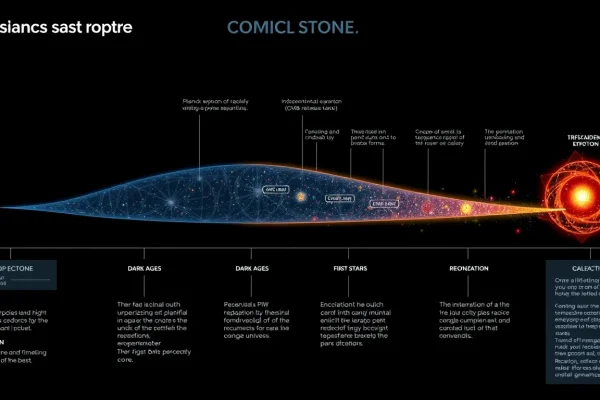
The Big Bang theory is often misunderstood. This guide debunks common myths and explains the true origin and evolution of the universe, from the Planck epoch to the present day.

The interactive reference to the origin and evolution of the universe, covering core concepts and common inquiries.
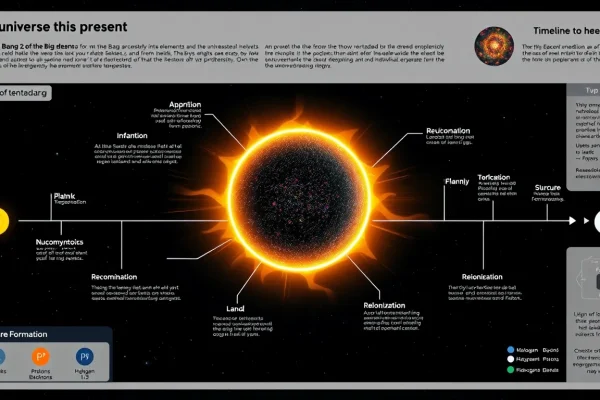
The Big Bang theory is often misunderstood. This guide debunks common myths and explains the true origin and evolution of the universe, from the Planck epoch to the present day.
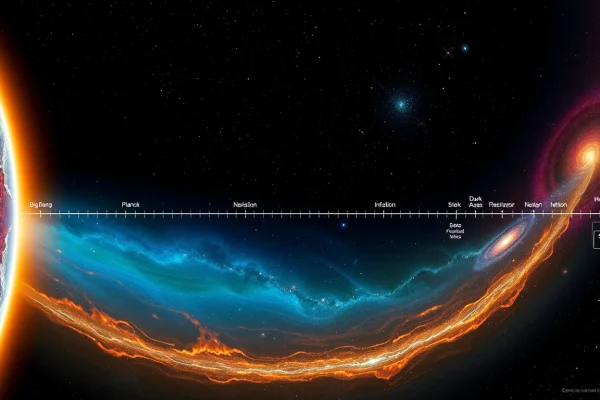
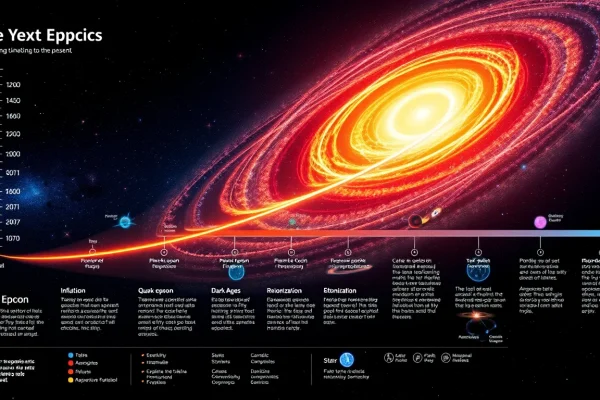
Cosmic inflation is the theory that the universe underwent an exponential expansion in the first fraction of a second after the Big Bang. This guide explains how inflation solved the horizon and flatness problems, seeded the large-scale structure, and set the stage for the cosmic epochs that followed—from the Planck epoch to the formation of stars and galaxies.
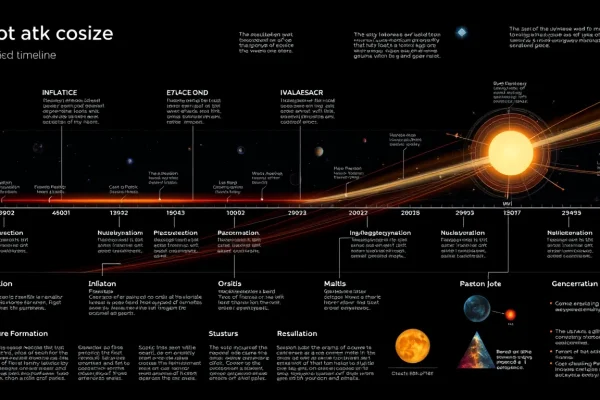
The Grand Unification Epoch was a fleeting period in the early universe, from about 10⁻⁴³ to 10⁻³⁵ seconds after the Big Bang, when three of the four fundamental forces were unified. This article explores that epoch, its place in cosmic history, and the full timeline from Planck time to the present day.
Explore the Big Bang model, from the Planck epoch to the formation of stars and galaxies. Learn about cosmic inflation, the cosmic microwave background, and the evidence supporting our modern understanding of the universe’s origin.
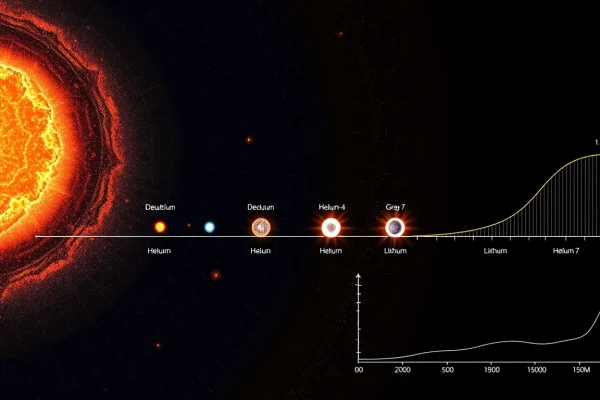
Big Bang nucleosynthesis (BBN) is the production of light elements during the first minutes of cosmic time. Its evidence comes from the remarkable agreement between predicted and observed primordial abundances, which also constrains the baryon density and supports the standard hot Big Bang model.
About three minutes after the Big Bang, the universe cooled to roughly a billion degrees, allowing protons and neutrons to fuse into light nuclei. This process, known as Big Bang nucleosynthesis, fixed the primordial hydrogen-to-helium ratio that still dominates the cosmos today.
Primordial helium, forged in the first minutes after the Big Bang, provides a crucial test of the hot Big Bang model. Its measured abundance matches theoretical predictions, reinforcing our understanding of the universe’s origin and evolution.
Explore the question of whether time began with the Big Bang, and journey through the major cosmic epochs—from the Planck epoch to the formation of stars and galaxies—guided by the standard Lambda-CDM model of cosmology.
The Big Bang was not an explosion from a single point in space. It was the beginning of space and time itself, occurring everywhere in the universe simultaneously. This article explains the origin, key epochs, and evolution of the cosmos, from the Planck epoch to the present day, and why the universe has no center or edge.
The Big Bang is the leading scientific explanation for the origin of the universe, describing its expansion from an extremely hot, dense state 13.8 billion years ago. This article explores the evidence, the cosmic epochs that followed, and the open question of what triggered the initial event.