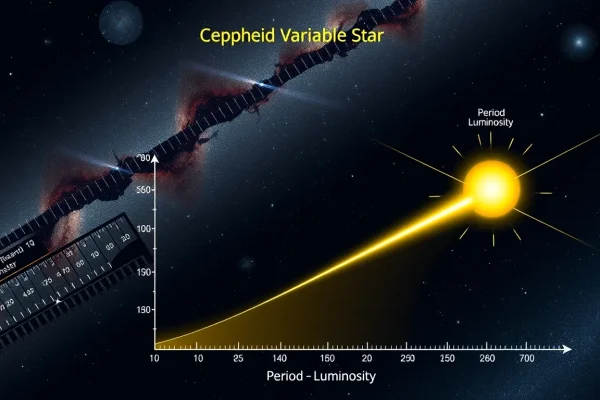
What Are Cepheid Variables and How Do They Measure Cosmic Distances?

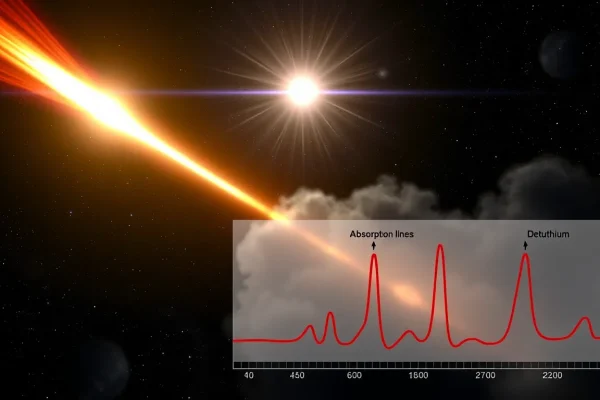
Cepheid variables are pulsating stars whose period of brightness variation is directly tied to their intrinsic luminosity. Discovered by Henrietta Leavitt in 1912, this period-luminosity relationship makes them essential ‘standard candles’ for measuring cosmic distances, from nearby galaxies to the expansion rate of the universe. This article explores how they work, their role in the cosmic distance ladder, and their connection to the evolution of the cosmos from the Planck epoch to the present.

Read More →

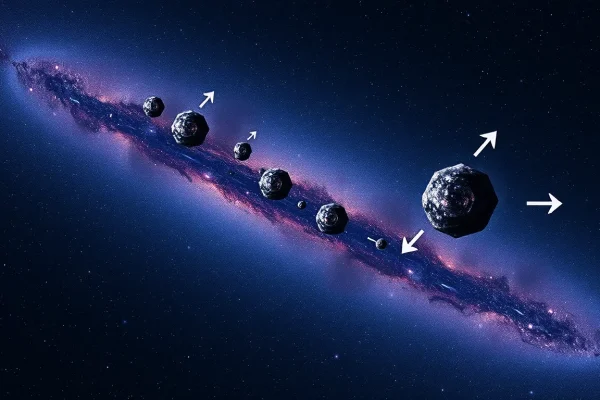
What Is the End of Greatness? The Scale Where the Universe Becomes Homogeneous

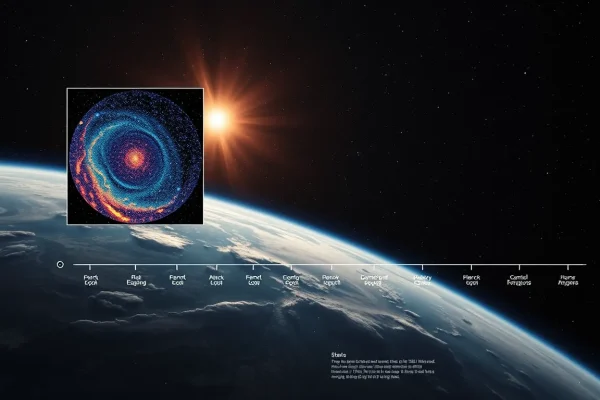
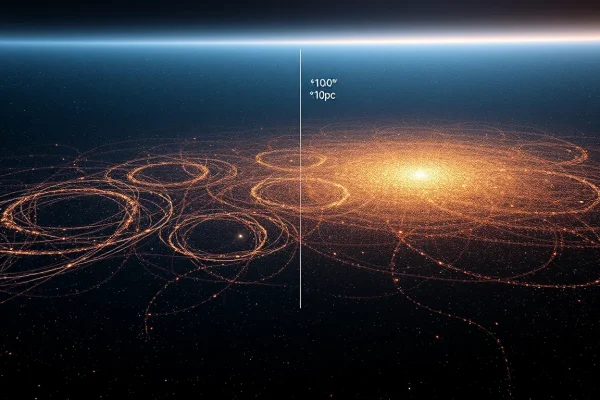
The End of Greatness marks the cosmic scale—roughly 100 megaparsecs—beyond which the universe’s lumpy structure gives way to smooth homogeneity. This article explores that threshold, the cosmic epochs leading to it, and the evidence from missions like COBE, WMAP, Planck, and JWST that anchor our understanding of the universe’s evolution.

Read More →

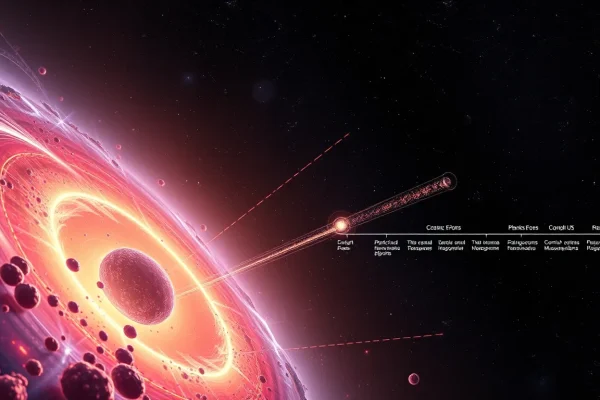
What Is Quantum Gravity? The Physics of the Planck Epoch

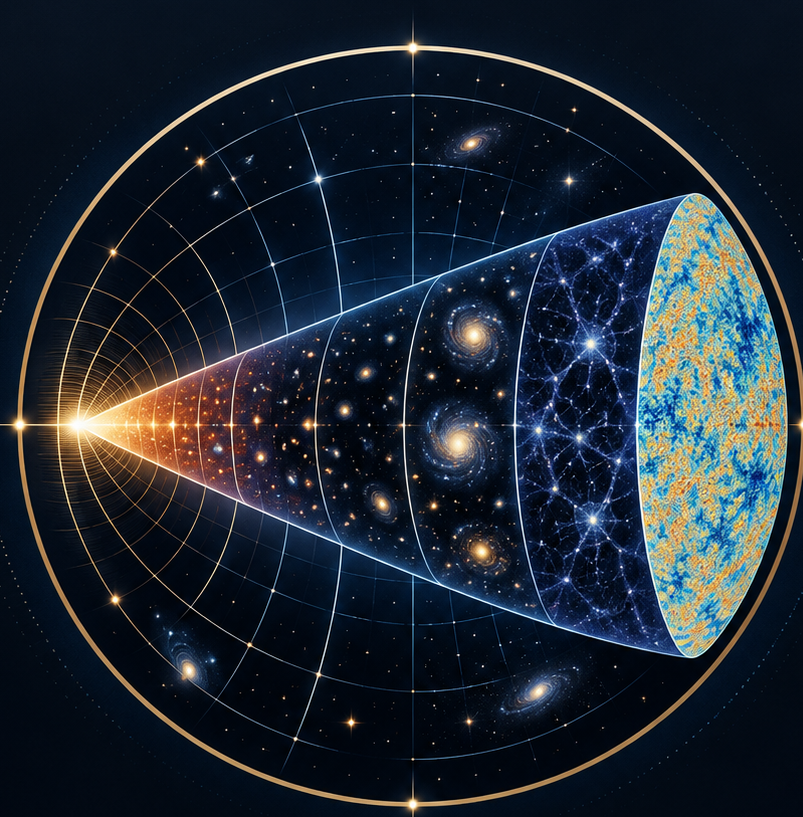
Quantum gravity is the still-incomplete theoretical framework needed to describe the universe at the Planck scale, where both quantum mechanics and general relativity are essential. This article explores the Planck epoch—the earliest instants after the Big Bang—and traces the cosmic timeline from that quantum-dominated beginning through inflation, nucleosynthesis, recombination, and the formation of stars and galaxies.

Read More →