
Short Answer
Main Explanation
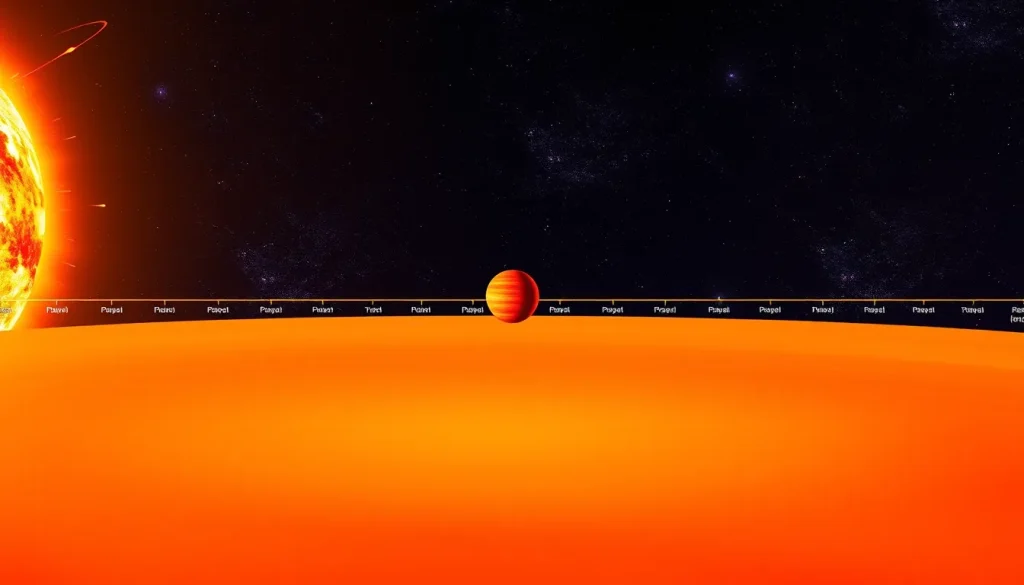
The inflationary epoch is a hypothesized period of extremely rapid, exponential expansion of space that occurred in the first fraction of a second after the Big Bang. According to the theory of cosmic inflation, the universe expanded by a factor of at least 10^26 in a timespan on the order of 10^-32 seconds. This idea was introduced in 1981 to resolve several fundamental problems with the standard Big Bang model, including the horizon problem and the flatness problem.
During inflation, a hypothetical field called the inflaton drove the expansion. Quantum fluctuations in this field were stretched to cosmic scales, providing the initial seeds for the formation of galaxies and large-scale structure. After inflation ended, the energy of the inflaton field decayed into a hot plasma of particles, a process known as reheating, initiating the hot Big Bang phase.
The inflationary epoch is part of the standard Lambda-CDM model of cosmology, supported by observations of the cosmic microwave background (CMB) and the large-scale distribution of galaxies. It is not a direct observation but a well-tested theoretical framework that explains the observed uniformity and flatness of the universe.

Cosmic Epoch: The Inflationary Epoch
When It Happened
Inflation is believed to have occurred approximately 10^-36 seconds to 10^-32 seconds after the Big Bang, preceding the electroweak epoch. The exact duration is model-dependent, but it was extraordinarily brief.
Temperature
The temperature during inflation is thought to have been around 10^27 K (roughly 10^14 GeV in particle physics units). The universe supercooled dramatically during the exponential expansion, and the energy density was dominated by the inflaton field.
Approximate Redshift
Because the universe expanded so violently, the redshift associated with the inflationary epoch is extremely high, often estimated at z > 10^30, though precise values depend on the reheating temperature and the details of the model.
Dominant Particles/Physics
The dominant physics was governed by the inflaton field, a scalar field with a potential energy that drove the accelerated expansion. At the end of inflation, the inflaton decayed into Standard Model particles, including quarks, leptons, and gauge bosons, via parametric resonance and perturbative decay.
What Happened
The universe expanded exponentially, stretching any initial curvature to near-flatness and homogenizing the observable universe. Quantum fluctuations in the inflaton field were magnified to astrophysical scales, creating slight density variations that later grew into galaxies and clusters. Inflation ended when the inflaton field reached the minimum of its potential, converting its energy into radiation and matter.
What Came Before
Before inflation, the universe was in the Grand Unification epoch, where the strong and electroweak forces were unified. The precise conditions that triggered inflation remain unknown, but it is often modeled as a phase transition from a false vacuum state.
What Came Next
After inflation, the universe entered the electroweak epoch, where the electromagnetic and weak forces separated. The reheating process produced a hot, dense plasma of particles that subsequently underwent quark, hadron, lepton, and photon epochs, eventually leading to recombination and the release of the cosmic microwave background.
Evidence
Evidence for inflation comes from observations of the CMB by missions such as COBE, WMAP, and Planck. The CMB is remarkably uniform (isotropic to about 1 part in 100,000), consistent with inflation’s prediction of a nearly scale-invariant spectrum of primordial perturbations. The flatness of the universe, measured to within 0.4% by Planck, also supports inflation. Additionally, the absence of certain topological defects (like magnetic monopoles) is explained by inflation.
Cosmic Timeline: From Planck Epoch to Present
| Epoch | Time After Big Bang | Temperature | Key Events |
|---|---|---|---|
| Planck Epoch | 0 to 10^-43 s | >10^32 K | Quantum gravity dominates; all forces unified |
| Grand Unification Epoch | 10^-43 to 10^-36 s | 10^27–10^32 K | Strong force separates from electroweak |
| Inflationary Epoch | 10^-36 to 10^-32 s | ~10^27 K | Exponential expansion; seeds of structure |
| Electroweak Epoch | 10^-32 to 10^-12 s | 10^15–10^27 K | Electromagnetic and weak forces split; W/Z bosons acquire mass |
| Quark Epoch | 10^-12 to 10^-6 s | 10^12–10^15 K | Quarks and gluons form quark-gluon plasma |
| Hadron Epoch | 10^-6 to 1 s | 10^10–10^12 K | Protons and neutrons form; baryon asymmetry develops |
| Lepton Epoch | 1 to 10 s | 10^9–10^10 K | Leptons and antileptons dominate; neutrinos decouple |
| Photon Epoch | 10 s to 380,000 yr | 10^3–10^9 K | Photons dominate; Big Bang nucleosynthesis (first nuclei) |
| Recombination | ~380,000 yr | ~3000 K | Electrons combine with nuclei; CMB released |
| Dark Ages | 380,000 yr to ~150 million yr | ~100–3000 K | No stars yet; universe is dark and neutral |
| Reionization | ~150 million to 1 billion yr | ~10–100 K | First stars and galaxies form; ionize hydrogen |
| Structure Formation | 1 billion yr to present | 2.7 K (today) | Galaxies, clusters, and large-scale structure evolve |
The cosmic microwave background (CMB) is a relic of recombination, when the universe became transparent. Its near-perfect blackbody spectrum and tiny anisotropies provide a snapshot of the universe at 380,000 years, confirming the predictions of inflation and the Lambda-CDM model.
Why It Matters
The inflationary epoch is not just a historical curiosity—it is central to our understanding of the universe’s origin and evolution. It explains why the universe appears so homogeneous and flat, why we see the large-scale structure we do, and why no magnetic monopoles are observed. Inflation also provides a mechanism for generating the initial density fluctuations that gave rise to galaxies and clusters. Without inflation, the standard Big Bang model would require impossibly precise initial conditions. The theory has been remarkably successful: predictions of a nearly scale-invariant spectrum of fluctuations were confirmed by COBE, WMAP, and the Planck satellite, earning the 2014 Kavli Prize for its pioneers. As we continue to study the CMB with missions like the Simons Observatory and SPHEREx, inflation remains a cornerstone of modern cosmology.
Evidence / Sources
Key evidence for inflation comes from precise measurements of the cosmic microwave background. The Planck satellite (2013–2018) measured the temperature anisotropies to unprecedented accuracy, finding a spectral index n_s = 0.965 ± 0.004, consistent with inflation. The flatness of the universe (Ω_k = 0.001 ± 0.002) also supports the inflationary prediction. Additionally, the lack of large-angle anomalies and the observed primordial gravitational wave background (if confirmed) would provide further validation. For a detailed review, see the Particle Data Group’s 2025 review on inflation (Ellis, Vennin, Wands) and the Cambridge Centre for Theoretical Cosmology’s introduction to inflation.
Related Registry Entries
- What Is the Big Bang?
- What Is the Cosmic Microwave Background?
- What Is Recombination?
- What Is the Large-Scale Structure of the Universe?
FAQ
What caused the inflationary epoch?
The leading hypothesis is that a scalar field called the inflaton, with a potential energy, drove the exponential expansion. The exact form of the potential is unknown, but many models exist. Quantum fluctuations in this field were stretched to cosmic scales, seeding structure.
How do we know inflation happened if we can't observe it directly?
Inflation makes testable predictions: a flat universe, a nearly scale-invariant spectrum of primordial density fluctuations, and the absence of magnetic monopoles. Observations of the CMB by COBE, WMAP, and Planck have confirmed these predictions with high precision.
Did inflation end abruptly?
Inflation ended when the inflaton field reached the minimum of its potential, a process called reheating. The energy of the field decayed into a hot plasma of Standard Model particles, initiating the hot Big Bang phase. This transition is modeled as a rapid, non-adiabatic process.





Leave a Reply