How SPHEREx Will Test Cosmic Inflation
Learn how NASA’s SPHEREx mission will map the sky in 102 infrared colors to test the theory of cosmic inflation, probing the universe’s first moments and the seeds of all structure.
Learn how NASA’s SPHEREx mission will map the sky in 102 infrared colors to test the theory of cosmic inflation, probing the universe’s first moments and the seeds of all structure.
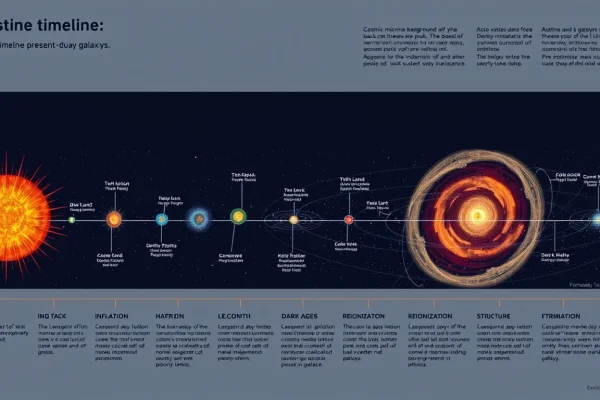
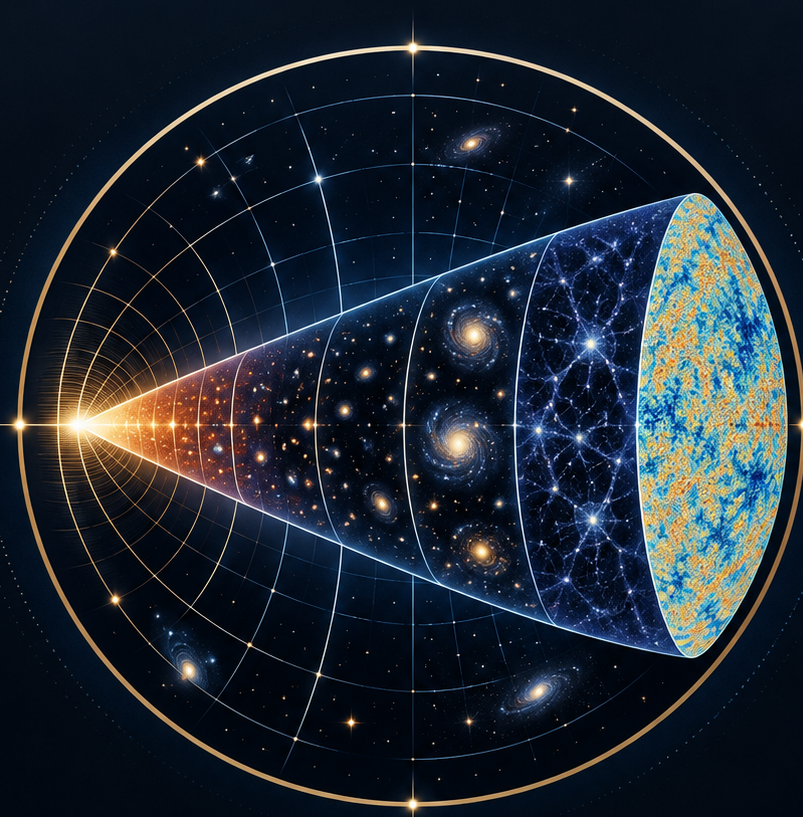
Galaxies formed from tiny quantum fluctuations in the early universe, growing through gravitational attraction and merging over billions of years. This guide explains the cosmic epochs from the Planck era to the present, the role of dark matter, and the evidence from the cosmic microwave background.
The Hubble constant measures the rate of cosmic expansion, a key number in cosmology. Learn how it’s measured, why it matters, and what the Hubble tension reveals about the universe’s evolution.
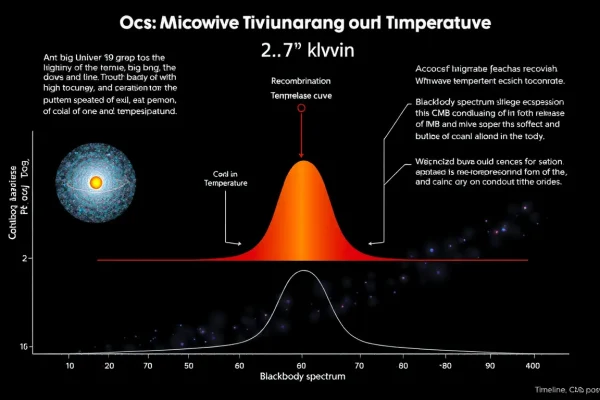
The cosmic microwave background (CMB) glows at a temperature of 2.7255 K, a relic of the hot, dense early universe. This article explains why the CMB has this temperature, how it encodes the history of cosmic expansion, and what it reveals about the key epochs from the Planck era to structure formation.
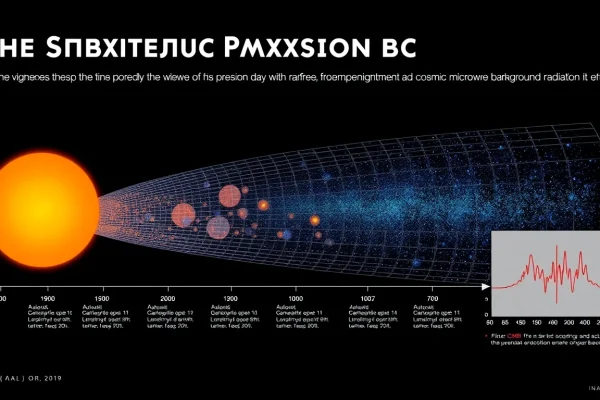
The expansion of the universe is the intrinsic increase in distance between gravitationally unbound parts of the cosmos over time. Discovered in the 1920s, this phenomenon underpins the Big Bang model and the Lambda-CDM framework, explaining the origin of galaxies, the cosmic microwave background, and the large-scale structure of the universe.