Short Answer
Main Explanation
The age of the universe is one of the most profound numbers in all of science. It represents the total time elapsed since the Big Bang, the moment when space, time, matter, and energy all came into existence. According to the latest data from the Planck mission, the universe is approximately 13.8 billion years old (source: Wikipedia, Planck project). But how do astronomers arrive at such a precise number? The answer lies in a combination of direct observation, theoretical modeling, and a cosmic detective story that spans the entire history of astronomy.
Astronomers use two primary approaches to measure the age of the universe. The first involves looking at the oldest stars in the universe, specifically those in globular clusters. The second, more precise method involves measuring the rate of expansion of the universe and extrapolating backward to the moment of the Big Bang (source: NASA Imagine the Universe). Both methods converge on the same answer, giving astronomers confidence in their measurements.
The Two Pillars of Cosmic Age Measurement
The first method relies on stellar evolution. Globular clusters are dense collections of up to a million stars that all formed at roughly the same time (source: NASA Imagine the Universe). By studying the properties of these stars, particularly their brightness and color, astronomers can determine their age. The oldest known globular clusters contain stars that are about 12 to 13 billion years old, providing a lower limit for the age of the universe.
The second method is based on the expansion of the universe. Since Edwin Hubble’s discovery in the 1920s, we have known that galaxies are moving away from us, and the farther away they are, the faster they recede. This relationship is described by the Hubble constant. If we know the current rate of expansion and the density of matter and energy in the universe, we can calculate how long it has been expanding. This is like rewinding a movie: if you know how fast the film is playing and where it ends, you can calculate when it began.
The Lambda-CDM Model: The Framework for Cosmic Age
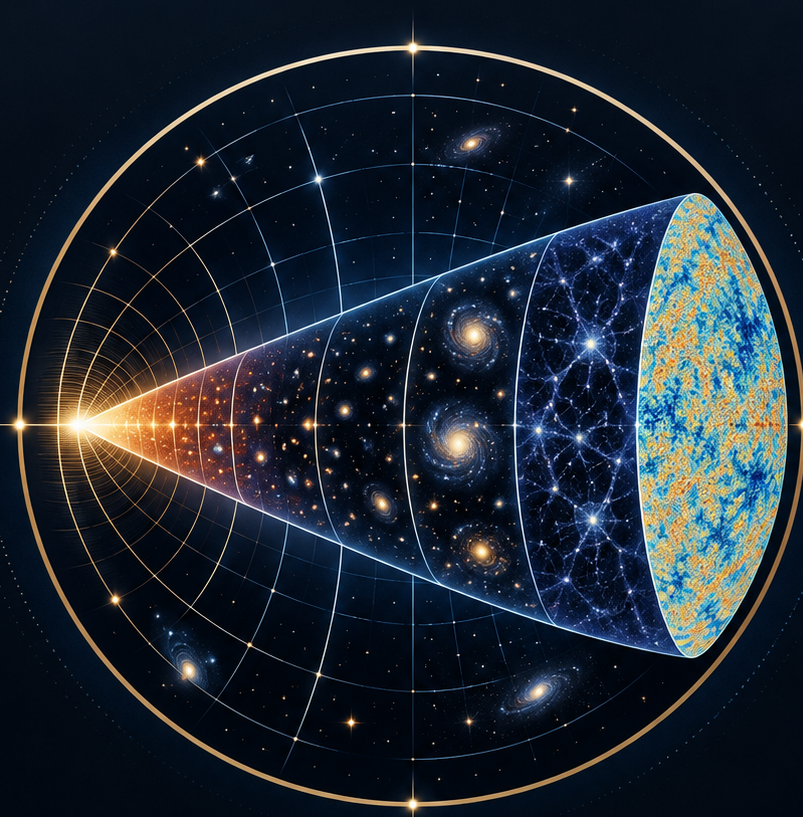
The modern calculation of the universe’s age is based on the Lambda-Cold Dark Matter (Lambda-CDM) model, which is the standard model of Big Bang cosmology. This model incorporates the effects of dark energy (represented by the Greek letter Lambda) and cold dark matter, along with ordinary matter and radiation. The Lambda-CDM model is matched to measurements of the cosmic microwave background (CMB), the faint afterglow of the Big Bang, to determine the age of the universe with remarkable precision (source: Wikipedia).
The Planck mission, which mapped the CMB in unprecedented detail between 2009 and 2013, provided the most precise measurements to date. By analyzing the tiny temperature fluctuations in the CMB, scientists were able to determine the composition of the universe and its expansion history, leading to the current best estimate of 13.8 billion years.
The Cosmic Timeline: From Planck Epoch to Present
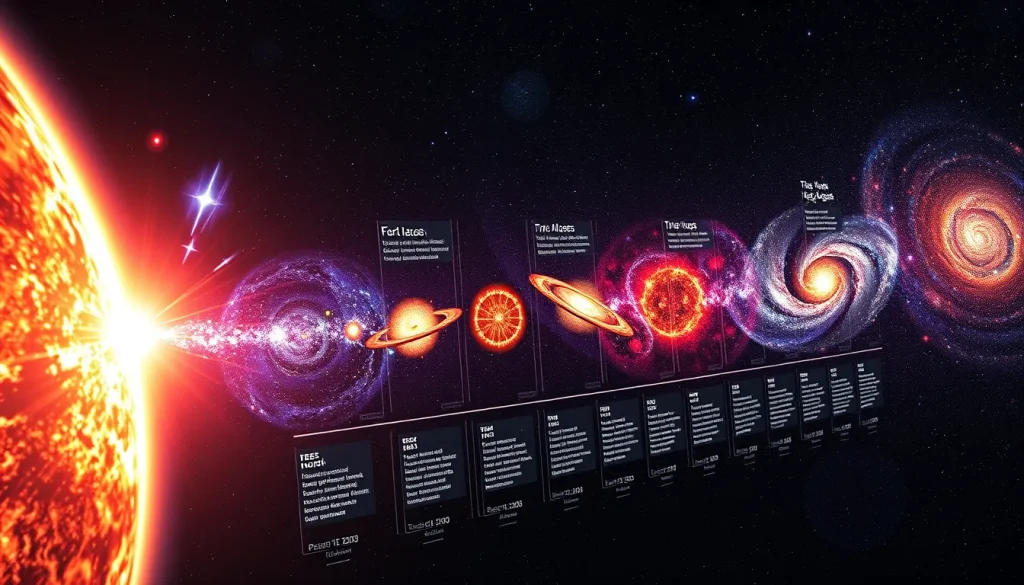
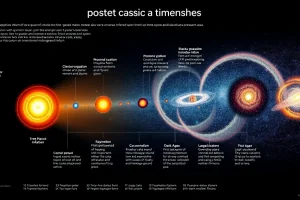
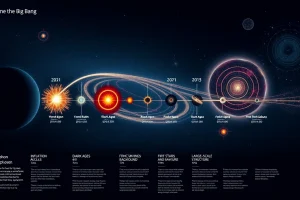
The history of the universe is divided into distinct epochs, each characterized by different physical conditions and processes. The following table summarizes the major epochs from the very beginning to the present day.
| Epoch | Time After Big Bang | Temperature | Key Events |
|---|---|---|---|
| Planck Epoch | 0 to 10⁻⁴³ seconds | > 10³² K | Quantum gravity era; all four fundamental forces unified |
| Grand Unification Epoch | 10⁻⁴³ to 10⁻³⁶ seconds | 10²⁷ to 10³² K | Strong nuclear force separates from electroweak force |
| Inflationary Epoch | 10⁻³⁶ to 10⁻³² seconds | ~10²⁷ K | Exponential expansion of space; quantum fluctuations seeded |
| Electroweak Epoch | 10⁻³² to 10⁻¹² seconds | 10¹⁵ to 10²⁷ K | Electromagnetic and weak forces separate |
| Quark Epoch | 10⁻¹² to 10⁻⁶ seconds | 10¹² to 10¹⁵ K | Quarks and gluons exist in a quark-gluon plasma |
| Hadron Epoch | 10⁻⁶ to 1 second | 10¹⁰ to 10¹² K | Protons and neutrons form; matter-antimatter annihilation |
| Lepton Epoch | 1 to 10 seconds | 10⁹ to 10¹⁰ K | Leptons dominate; neutrinos decouple |
| Photon Epoch | 10 seconds to 380,000 years | 3,000 to 10⁹ K | Photons dominate; Big Bang nucleosynthesis occurs |
| Recombination | ~380,000 years | ~3,000 K | First atoms form; CMB released |
| Dark Ages | 380,000 to ~150 million years | ~60 to 3,000 K | No stars; universe filled with neutral hydrogen |
| Reionization | ~150 million to 1 billion years | ~20 to 60 K | First stars and galaxies form; reionize hydrogen |
| Structure Formation | 1 billion years to present | 2.7 K (today) | Galaxies, clusters, and superclusters form |
The Planck Epoch: The Very Beginning
The Planck epoch is the earliest known period of the universe, lasting from time zero to approximately 10⁻⁴³ seconds after the Big Bang. This is the smallest interval of time that can be described by our current understanding of physics. During this epoch, the universe was unimaginably hot and dense, with temperatures exceeding 10³² Kelvin. At these extreme conditions, the four fundamental forces of nature—gravity, electromagnetism, the strong nuclear force, and the weak nuclear force—are thought to have been unified into a single force. Our current theories, which combine general relativity and quantum mechanics, break down at this scale, and we do not yet have a complete theory of quantum gravity to describe what happened.
The Grand Unification Epoch
As the universe expanded and cooled, the first symmetry breaking occurred at the end of the Planck epoch. During the Grand Unification Epoch (10⁻⁴³ to 10⁻³⁶ seconds), the strong nuclear force separated from the electroweak force. This process is described by Grand Unified Theories (GUTs), which attempt to unify the strong, weak, and electromagnetic forces. The energy released during this phase transition may have driven a period of rapid expansion known as inflation.
The Inflationary Epoch: A Cosmic Growth Spurt
Inflation is one of the most important concepts in modern cosmology. Proposed by Alan Guth in 1980, inflation posits that the universe underwent an exponential expansion in the first 10⁻³² seconds of its existence. During this incredibly brief period, the universe expanded by a factor of at least 10²⁶, smoothing out any irregularities and explaining why the universe appears so uniform on large scales. Quantum fluctuations during inflation were stretched to cosmic scales, providing the seeds for the formation of galaxies and clusters of galaxies. The inflationary epoch is supported by observations of the CMB, which show a nearly uniform temperature with tiny fluctuations that match the predictions of inflation.
The Electroweak Epoch
Following inflation, the universe entered the Electroweak Epoch (10⁻³² to 10⁻¹² seconds). During this period, the electromagnetic and weak nuclear forces were still unified as the electroweak force. As the universe continued to cool, the Higgs mechanism caused the electroweak symmetry to break, separating the electromagnetic and weak forces and giving particles their mass. This process is well understood and has been confirmed by experiments at particle accelerators such as the Large Hadron Collider.
The Quark Epoch
From 10⁻¹² to 10⁻⁶ seconds after the Big Bang, the universe was filled with a hot, dense plasma of quarks and gluons. This state of matter, known as a quark-gluon plasma, is so extreme that it has been recreated in particle accelerators like the Relativistic Heavy Ion Collider. During this epoch, the universe was too hot for quarks to bind together into protons and neutrons.
The Hadron Epoch
As the universe cooled to about 10¹² Kelvin, quarks began to combine into hadrons—particles like protons and neutrons. This period, known as the Hadron Epoch (10⁻⁶ to 1 second), also saw a significant event: the annihilation of matter and antimatter. For every billion antiparticles, there were a billion and one particles, leaving a tiny excess of matter that would go on to form everything we see today. This asymmetry is one of the great unsolved mysteries of physics.
The Lepton Epoch
Between 1 and 10 seconds after the Big Bang, the universe was dominated by leptons—light particles like electrons and neutrinos. During this epoch, neutrinos decoupled from the rest of matter, creating a cosmic neutrino background that we can still detect today. The lepton epoch ended when the universe cooled enough for protons and neutrons to combine into atomic nuclei.
The Photon Epoch and Big Bang Nucleosynthesis
The Photon Epoch lasted from 10 seconds to about 380,000 years after the Big Bang. During this period, the universe was filled with a dense plasma of photons, electrons, and atomic nuclei. The universe was opaque because photons constantly interacted with free electrons. During the first few minutes of this epoch, Big Bang Nucleosynthesis (BBN) occurred. This process produced the lightest elements: hydrogen, helium, and trace amounts of lithium. The predicted abundances of these elements match observations remarkably well, providing strong evidence for the Big Bang model.
Recombination: The Universe Becomes Transparent
About 380,000 years after the Big Bang, the universe had cooled to about 3,000 Kelvin. At this temperature, electrons and protons combined to form neutral hydrogen atoms in a process called recombination. This event is crucial because it allowed photons to travel freely through space, making the universe transparent. The photons released at this moment are what we observe today as the cosmic microwave background (CMB). The CMB is a relic of the early universe, a snapshot of the universe when it was just 380,000 years old. Missions like COBE, WMAP, and Planck have mapped the CMB in exquisite detail, revealing tiny temperature fluctuations that tell us about the composition and evolution of the universe.
The Dark Ages
After recombination, the universe entered a period known as the Dark Ages. During this time, the universe was filled with neutral hydrogen gas, and no stars or galaxies had yet formed. The universe was literally dark, as no light sources existed. This period lasted until about 150 million years after the Big Bang, when gravity began to pull matter together into the first structures.
Reionization and the First Stars
The first stars, known as Population III stars, formed from the primordial hydrogen and helium. These stars were massive, hot, and short-lived. Their intense ultraviolet radiation began to ionize the neutral hydrogen, a process called reionization. This epoch, which lasted from about 150 million to 1 billion years after the Big Bang, marked the end of the Dark Ages and the beginning of the universe as we know it. The James Webb Space Telescope (JWST) is currently studying this era, revealing the first galaxies and stars in unprecedented detail.
Structure Formation: Building the Cosmic Web
Over the next several billion years, gravity amplified the tiny density fluctuations seeded by inflation. Dark matter, which does not interact with light, provided the gravitational scaffolding for the formation of galaxies. Ordinary matter fell into these dark matter halos, forming galaxies, clusters, and superclusters. The large-scale structure of the universe—a vast cosmic web of filaments and voids—is a direct consequence of these processes. Observations of galaxy distributions and the CMB provide strong evidence for this model.
Why It Matters
Knowing the age of the universe is not just a matter of cosmic curiosity. It is fundamental to our understanding of everything from the life cycle of stars to the ultimate fate of the cosmos. The age of the universe sets the timescale for all cosmic evolution. It tells us when the first stars ignited, when galaxies formed, and how long it took for the elements necessary for life to be created. It also provides a critical test for our cosmological models. If the universe were younger than its oldest stars, we would know our models are wrong. The fact that the age of the universe (13.8 billion years) is greater than the age of the oldest known stars (about 12-13 billion years) is a crucial consistency check (source: Wikipedia).
Furthermore, the age of the universe is intimately connected to the Hubble constant, the rate of cosmic expansion. The current tension between different measurements of the Hubble constant—one from the CMB and one from local distance measurements—is one of the most exciting problems in cosmology. Resolving this tension could lead to new physics beyond the standard model.
Evidence / Sources
The age of the universe is supported by multiple independent lines of evidence:
- Cosmic Microwave Background: The Planck mission’s measurements of the CMB provide the most precise estimate of the universe’s age: 13.8 billion years (source: Wikipedia).
- Oldest Stars: The ages of the oldest stars in globular clusters, about 12-13 billion years, provide a lower limit for the age of the universe (source: NASA Imagine the Universe).
- Expansion Rate: Measurements of the Hubble constant, combined with the density of matter and energy, allow astronomers to calculate the age of the universe by extrapolating backward (source: BBC Sky at Night Magazine).
- Big Bang Nucleosynthesis: The observed abundances of light elements (hydrogen, helium, lithium) match predictions based on the age and conditions of the early universe.
Related Registry Entries
- Cosmic Microwave Background
- Hubble Constant
- Big Bang Nucleosynthesis
- Inflation
- Reionization
FAQ
How do astronomers measure the age of the universe?
Astronomers use two main methods: (1) studying the oldest stars in globular clusters to determine a minimum age, and (2) measuring the rate of expansion of the universe (the Hubble constant) and extrapolating backward to the Big Bang. The most precise method uses data from the cosmic microwave background, as measured by the Planck mission, combined with the Lambda-CDM model.
What is the cosmic microwave background and why is it important?
The cosmic microwave background (CMB) is the afterglow of the Big Bang, released about 380,000 years after the universe began when it cooled enough for atoms to form. It is a relic of the early universe that provides a snapshot of its conditions. By mapping the tiny temperature fluctuations in the CMB, missions like COBE, WMAP, and Planck have determined the universe's age, composition, and geometry with remarkable precision.
Why is there a discrepancy in the Hubble constant measurements?
There is a current tension between measurements of the Hubble constant from the early universe (using the CMB) and those from the late universe (using local distance measurements like Cepheid variables and supernovae). The CMB-based measurements give a value of about 67 km/s/Mpc, while local measurements give about 73 km/s/Mpc. This discrepancy is one of the biggest unsolved problems in cosmology and may indicate new physics beyond the standard model.
What was the Planck epoch?
The Planck epoch is the earliest period of the universe, lasting from time zero to about 10⁻⁴³ seconds after the Big Bang. During this time, the universe was so hot and dense that all four fundamental forces were unified, and our current understanding of physics breaks down. A complete theory of quantum gravity is needed to describe this era.

Leave a Reply