
Short Answer
Short Answer / Definition
Molecular hydrogen (H₂) is the primary coolant in the primordial gas that formed the first stars and galaxies. In the absence of metals, H₂ molecules are the only efficient radiator at temperatures below ~10,000 K, allowing gas clouds to collapse and ignite star formation. This process set the stage for the first galaxies, the epoch of reionization, and the subsequent evolution of cosmic structure.
Main Explanation
The first galaxies formed from the collapse of dark matter halos containing primordial gas—hydrogen and helium left over from Big Bang nucleosynthesis. Without metals, the gas could not cool efficiently through atomic lines alone. Molecular hydrogen (H₂) became the crucial cooling agent, enabling the gas to shed thermal energy and contract to densities high enough for star formation.
How H₂ Cooling Works
In the early universe, the gas temperature after recombination was ~3000 K, but the cosmic microwave background cooled it to a few hundred kelvin. To form stars, gas must collapse to temperatures below ~100 K. Atomic hydrogen can cool gas to ~8000 K, but below that it becomes inefficient. H₂, with its small moment of inertia and rotational transitions, can radiate at temperatures from ~100 to ~2000 K, bridging the gap. This allows the gas to fragment and form the first (Population III) stars.
As noted in the literature, “H₂ molecules are the primary coolant in primordial star formation” (source [1]). The efficiency of H₂ cooling determines the minimum mass of a dark matter halo that can host star formation. Simulations by Machacek et al. (2001) showed that a soft UV background—which photodissociates H₂ via Lyman–Werner photons—can delay or suppress cooling in small halos (10⁶ M☉), raising the critical mass threshold (source [4]).
Galaxy Formation Threshold
Recent work by Nadler (2025) calculates the fraction of dark matter halos that exceed the critical mass for star formation, Mcrit(z), considering both H₂ and atomic hydrogen cooling. The study finds that halos with peak virial masses below ~10⁸ M☉ can form stars before reionization through H₂ cooling alone, while those relying only on atomic cooling remain dark (source [2]). This threshold is crucial for understanding the population of dwarf galaxies and the timing of cosmic reionization.
From First Stars to First Galaxies
The first stars ionized their surroundings and produced heavy elements in supernovae. These metals then enabled more efficient cooling in subsequent generations, transitioning from H₂-dominated to metal-line cooling. The first galaxies assembled as these stars and their remnants merged, driving reionization and enriching the intergalactic medium (source [3]). H₂ also plays a role in the formation of direct-collapse black holes and the seeds of supermassive black holes, though this remains an active research area.
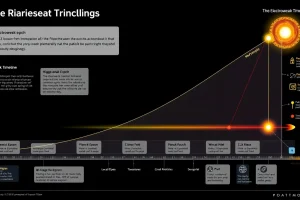
Cosmic Epoch Timeline
| Epoch | Time after Big Bang | Redshift | Key Event |
|---|---|---|---|
| Planck epoch | 0 – 10⁻⁴³ s | ∞ | Quantum gravity effects |
| Grand Unification epoch | 10⁻⁴³ – 10⁻³⁶ s | ~10³² | Unification of forces |
| Inflationary epoch | 10⁻³⁶ – 10⁻³² s | ~10²⁸ | Exponential expansion |
| Electroweak epoch | 10⁻³² – 10⁻¹² s | ~10¹⁵ | Electromagnetic & weak forces separate |
| Quark epoch | 10⁻¹² – 10⁻⁶ s | ~10¹² | Quarks and gluons exist |
| Hadron epoch | 10⁻⁶ – 1 s | ~10¹⁰ | Protons and neutrons form |
| Lepton epoch | 1 – 10 s | ~10⁹ | Leptons dominate |
| Photon epoch | 10 s – 380,000 yr | ~10⁸ – 1100 | Photons dominate; nucleosynthesis |
| Recombination | 380,000 yr | ~1100 | First atoms form; CMB released |
| Dark Ages | 380,000 yr – ~100 Myr | 1100 – 30 | No stars yet; H₂ forms |
| Reionization / First Stars | ~100 Myr – 1 Gyr | 30 – 6 | First stars and galaxies; H₂ cooling |
| Structure Formation | 1 Gyr – present | 6 – 0 | Galaxies cluster; large-scale structure |
Observational Evidence and Missions
While H₂ itself is difficult to observe directly, its effects are seen in the abundance of early galaxies and the progress of reionization. The James Webb Space Telescope (JWST) is now probing the epoch of reionization, revealing galaxies that formed within the first few hundred million years. COBE, WMAP, and Planck have precisely measured the cosmic microwave background, providing initial conditions for structure formation. Future instruments like the Simons Observatory and SPHEREx will further constrain the role of H₂ and the first galaxies.
Question Article
Short Answer
Molecular hydrogen is the essential coolant that allowed the first generation of stars to form in the early universe, thereby enabling the assembly of the first galaxies.
What We Know
H₂ forms in the gas phase via the H⁻ and H₂⁺ channels, and its cooling efficiency is well understood theoretically. Simulations consistently show that H₂ cooling lowers the minimum halo mass for star formation to ~10⁵–10⁶ M☉ in the absence of feedback. Lyman–Werner radiation from early stars can dissociate H₂, raising this threshold. The first galaxies likely formed in halos with masses ~10⁷–10⁸ M☉, and their star formation was self-regulated by H₂ destruction and metal enrichment.
What We Don’t Know
The exact efficiency of H₂ cooling in the presence of strong LW backgrounds, the role of H₂ in the formation of massive black hole seeds, and the detailed feedback processes that shaped the first galaxies remain uncertain. The transition from Population III to Population II stars and the precise timing of reionization are also not fully constrained.
Evidence
Evidence comes from cosmological simulations (e.g., Machacek et al. 2001; Johnson 2012) and from observations of high-redshift galaxies by JWST. The measured abundance of early galaxies and the optical depth of reionization are consistent with models that include H₂ cooling. The lack of observed dark matter halos below a certain mass also supports the role of H₂ photodissociation.
Competing Explanations
Alternative cooling agents, such as HD (deuterated hydrogen), can be important in some conditions, but H₂ dominates in the early universe. Some models propose that the first stars formed in larger halos via atomic cooling, but H₂ remains the standard mechanism for the lowest-mass halos.
Current Research
Ongoing research uses high-resolution simulations with realistic feedback, and JWST is providing data to test models of early galaxy formation. The study of 21-cm emission from neutral hydrogen during the Dark Ages will also probe the thermal state of the gas and the role of H₂.
Why It Matters
Understanding the role of molecular hydrogen is fundamental to explaining when and how the first stars and galaxies formed. This knowledge connects the physics of the early universe to the observed properties of present-day galaxies, dark matter halos, and the reionization history. It also informs searches for the first luminous objects and helps interpret upcoming observations from JWST and next-generation telescopes.
Evidence / Sources
The following sources provide authoritative information on the role of H₂ in the first galaxies:
- Cambridge University Press – The Role of H2 Molecules in Primordial Star Formation
- Nadler (2025) – The Impact of Molecular Hydrogen Cooling on the Galaxy Formation Threshold
- Johnson (2012) – Formation of the First Galaxies: Theory and Simulations
- Machacek, Bryan, & Abel (2001) – Simulations of Pregalactic Structure Formation with Radiative Feedback
Related Registry Entries
Explore other cosmic epochs and concepts:
- Recombination and the Cosmic Microwave Background
- The Dark Ages
- Epoch of Reionization
- First Stars & Galaxies
- Inflation and the Big Bang
FAQ
Why is molecular hydrogen important for the first galaxies?
Molecular hydrogen is the only efficient coolant in metal-free gas, allowing it to collapse and form stars. Without H₂, the first galaxies would not have formed until much later, if at all.
How does Lyman–Werner radiation affect H₂?
Lyman–Werner photons (11.2–13.6 eV) can dissociate H₂ molecules, reducing cooling efficiency and raising the minimum halo mass for star formation. This feedback regulates the formation of the first stars.
What is the critical halo mass for H₂ cooling?
In the absence of feedback, halos with masses as low as ~10⁵ M☉ can cool via H₂. With a strong Lyman–Werner background, the threshold rises to ~10⁸ M☉ (Nadler 2025).
References
- https://www.cambridge.org/core/books/molecular-hydrogen-in-space/role-of-h2-molecules-in-primordial-star-formation/BBD9FC583E9F92AAC3DA27F7F2C212CE
- https://beta.iopscience.iop.org/article/10.3847/2041-8213/adbc6e
- https://doi.org/10.1007/978-3-642-32362-1_4
- https://iopscience.iop.org/article/10.1086/319014/fulltext/52271.text.html
Related Articles


Leave a Reply